
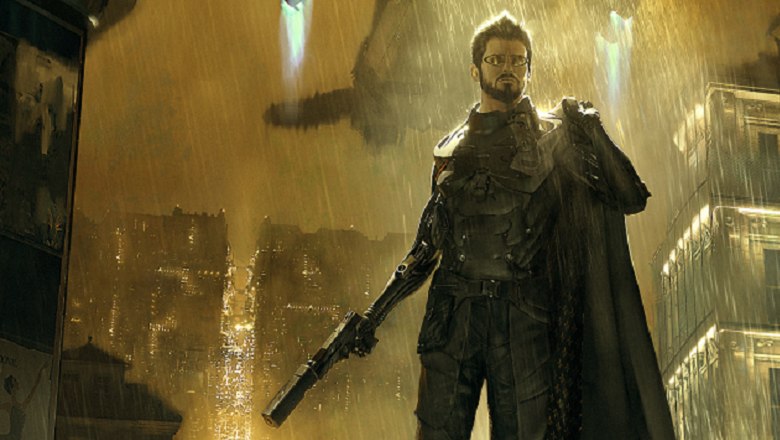
The Deus Ex series was lucky not only to become the progenitor of the cyberpunk stealth immersive genre, but also — largely thanks to the efforts of the team led by Warren Spector and Sheldon Pacotti — to give life to such equally famous projects as Cyberpunk 2077, Dishonored, Prey, Alpha Protocol and others. The latest games — and they really are the last, because Embracer shut down two projects in the universe this year and the IP rights went under the hammer somewhere in Activision's direction — the games about the «augs» and the «naturals» are remembered by players not only for their unique visual style in black-and-gold tones, but also for levels with a lot of «vertical» puzzles and free movement, where the only correct solution to a quest is the one the player chose; they deliver dozens of hours of engaging exploration of the game world. This is, of course, not the revelation that the first Deus Ex was — the original is hard to surpass, both in mechanics and in plot twists. But the authors of the sequel managed to expand the mechanics without breaking the combinatorics of interaction along the way. In the previous article I talked about the importance of natural architecture when building levels, so in this one let's pay more attention to the small things and to that very combinatorics of mechanics, which is the series' distinguishing feature. On relatively small levels, the task of making diverse — and often mutually blocking — mechanics «get along» becomes a kind of puzzle, and designers spend months of actual work on debugging and edge cases.
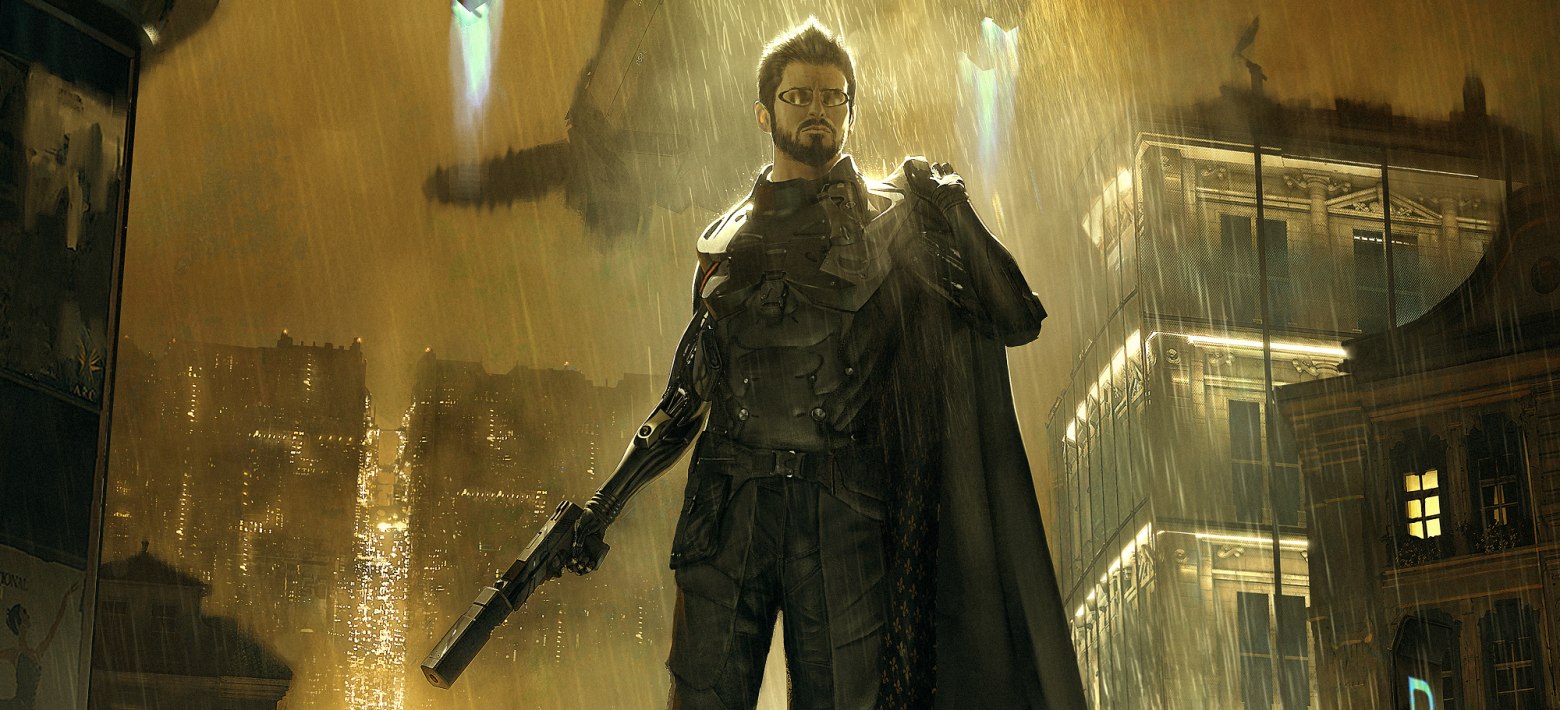
Procházím se po noční Praze v černých brýlích. Nejsem feťák, jsem kyborg
The reason that prompted me to write an article about this game was the news of the closure of Eidos Montreal in January of this year, along with the shelving of two games in the Deus Ex universe and a Tomb Raider sequel. If you think a large studio — and the division had around two hundred people at the time of closure — can be shut down quickly, you're mistaken. Closing such a large and well-known studio takes more than a year; usually, about six months before D-day, everyone is given the chance to find another position and part on good terms with an honorary certificate and an entry in the work record book... oops, the contract. At the time of closure 97 people were laid off — I think this was the remaining non-combat staff: accountants, office managers, salespeople and juniors who had to stick around for a year to have a line on their résumé. Or the old-timers for whom it mattered to wait for their option bonuses. So do the math yourself: the half that was the actual dev team had bailed noticeably earlier than doom day. Well, RIP as they say — someone else will take your augmentations (c).
Dawn Engine
The engine traces its lineage from grandpa Glacier, created by the Danish IO Interactive — then still just students — back in 1994, which is used in all the games of the Hitman series. In 2009 Glacier (v3.3) was handed over to Eidos-Montreal, and from then on their development ran in parallel. Glacier was developed for commercial licensing, with the reboot of the series about the bald assassin as its showroom, while Dawn Engine became the home one for Adam Jensen. It's worth noting that a Square Enix division (Eidos Montreal Labs) was located right there in Montreal, responsible for research and innovation across all the group's studios. As I understand it, the folks sat, if not at neighboring desks, then at least in neighboring open spaces. By the time DE:MD came out, the engine had reached its second version, getting ahead of its parent technologically. Here's what was in Dawn Engine and what wasn't — and still isn't even now — in Glacier 2:
- Umbra 2 — a technology that caches level geometry and speeds up occlusion culling of invisible surfaces. The main consumers of this technology were building-design tools and commercial simulators with a high level of detail, for example in city planning.
- PhysX 3.4 — the latest release of the physics engine at the time.
- NVidia APEX — one of the first games to use the new simulation system for soft surfaces, liquids and gases. Also one of the first games to use a «true» (volumetric) simulation of gases indoors (PC version only).
- Scaleform — the entire user interface in the game is done in 3D, from the main menu to the credits. Under the hood lives the age-old Flash technology, once banished from the web but still alive and well as a UI tool for games.
- Nav Power (babelflux.com) — never mind that the site is from the 90s, it's actually still one of the most powerful and feature-rich navigation and navmesh-generation systems for games; what's natively in Unreal Engine now is an order of magnitude worse in functionality. As examples I can cite the use of this technology in Guild Wars 2, The Division, Tomb Raider, Dragon Age — and my current project too.
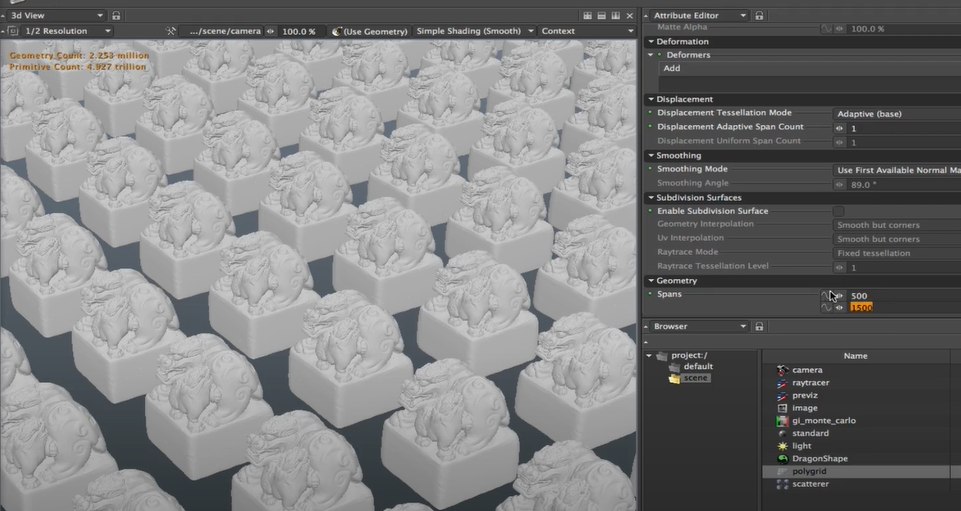
Below I'll give a summary table of rarely shown engine characteristics in a synthetic test rendering a scene with many unique objects, ~2M polygons. The screenshot is from iSotropix Clarisse iFX, which let me procedurally generate unique objects so the engine couldn't optimize them away.
The gpu_idle counter — the higher the worse for the engine; it means the programmers slacked off and the GPU «rested». On the other hand, it's headroom for the future, because that time can be given to some other tasks.
The vertex_shader_busy and pixel_shader_busy values show how much of the frame is spent on vertex and pixel shaders respectively; render programmers are responsible for optimizing these, and values above 30% are considered a reason to look into what's wrong with the engine's graphics pipeline.
The shader_waits_for_rop value is the time spent waiting to write data into the framebuffer; it depends heavily on the complexity of the shaders used, the anti-aliasing algorithms, and post-processing in general, which uses rendering into buffers.
The shader_waits_for_texture counter shows how well the engine's texture pipeline is optimized (caching, loading, texture memory management) and the need for additional texture fetches.
This is all synthetic, but very telling for assessing the technological maturity of a given engine. The values were obtained with the Pix profiler, in 2019, when I had trial access to Unigine, but there wasn't enough data for a full article back then. For Dawn Engine/Glacier I used the Cargo mod from moddb, which lets you load arbitrary levels for DE/Hitman respectively. Unreal/Cry Engine/Unity were taken for comparison.
| Framework | Dawn Engine | Glacier 2 | Unreal 4 | Cry Engine | Unity | Unigine (2019) |
|---|---|---|---|---|---|---|
| 2M polygons, ms | 36.4 | 44.6 | 33.9 | 29.5 | 49.1 | 46.7 |
| gpu_idle, % | 11.1 | 19.6 | 19.0 | 13.2 | 18.3 | 12.6 |
| vertex_shader_busy, % | 7.6 | 7.4 | 7.2 | 6.2 | 10.7 | 10.7 |
| shader_waits_for_texture, % | 10.1 | 11.1 | 10.3 | 9.6 | 10.7 | 12.9 |
| shader_waits_for_rop, % | 25.6 | 27.1 | 27.5 | 16.0 | 26.0 | 26.3 |
| pixel_shader_busy, % | 31.1 | 31.5 | 34.2 | 24.2 | 31.0 | 34.5 |
| other, % | 15.2 | 5.0 | 4.0 | 30.0 | 1.0 | 6.0 |
But these are rather technical matters, just to show that the game was built on the cutting edge of 2015-era engine technology — and, given that PhysX 3.4 only shipped in 2017, even ahead of it.
Visual style
Patrick Fortier (Lead Gameplay) and Philippe Desrosiers (Lead Animator) were responsible for the game's overall look, and the former smuggled into the game time-tested ideas from Myst IV, in the form of repeating stylized architectural elements.
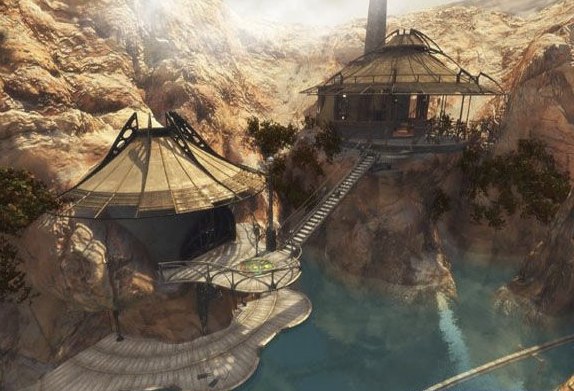
And if in Myst those elements were lacy beams and rounded forms of buildings and environmental objects, then in Deus Ex such objects became black or gold polygons in the architecture — both in Prague and in the city of Golems and other locations.
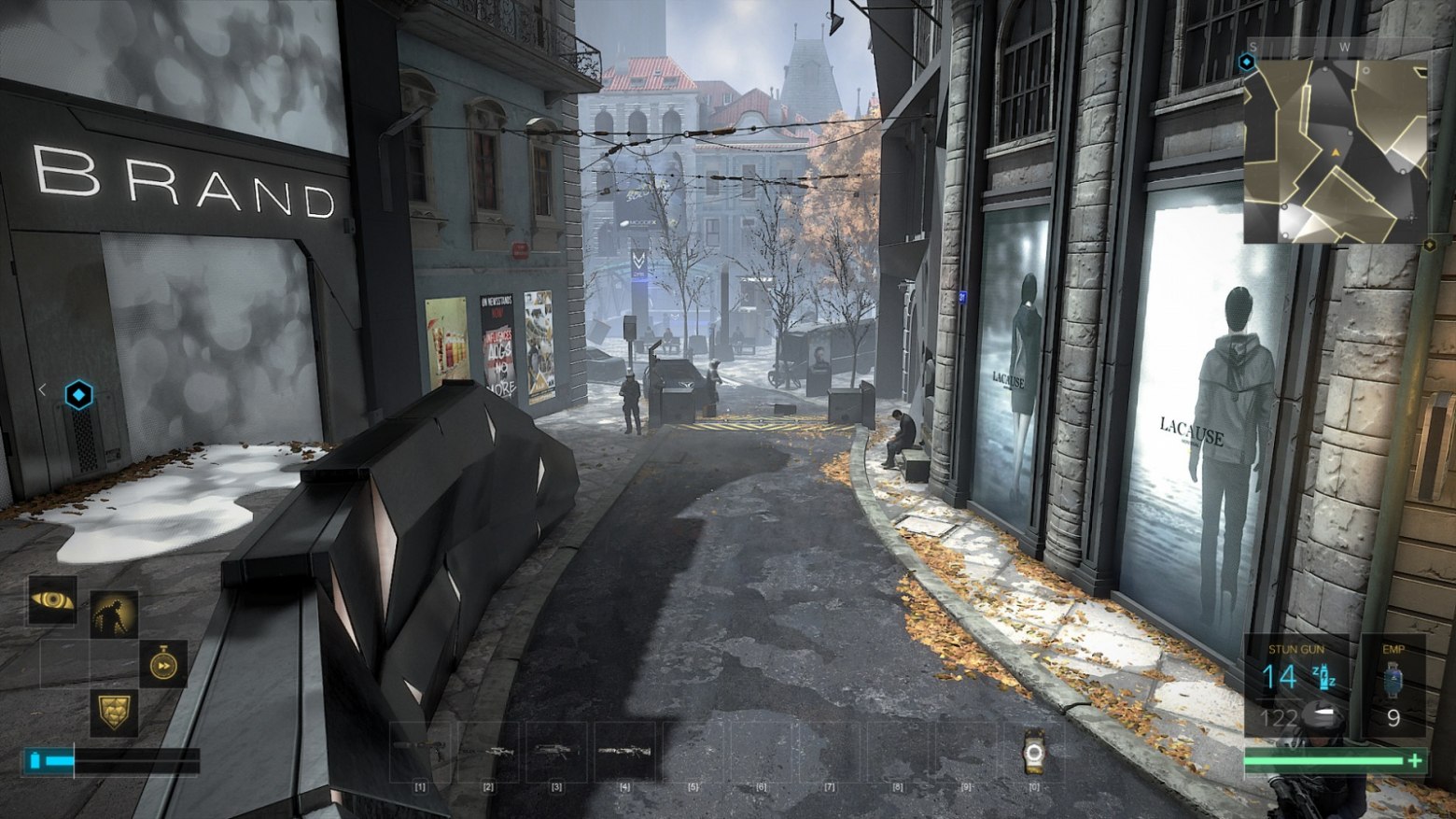
More black-and-gold polygons:
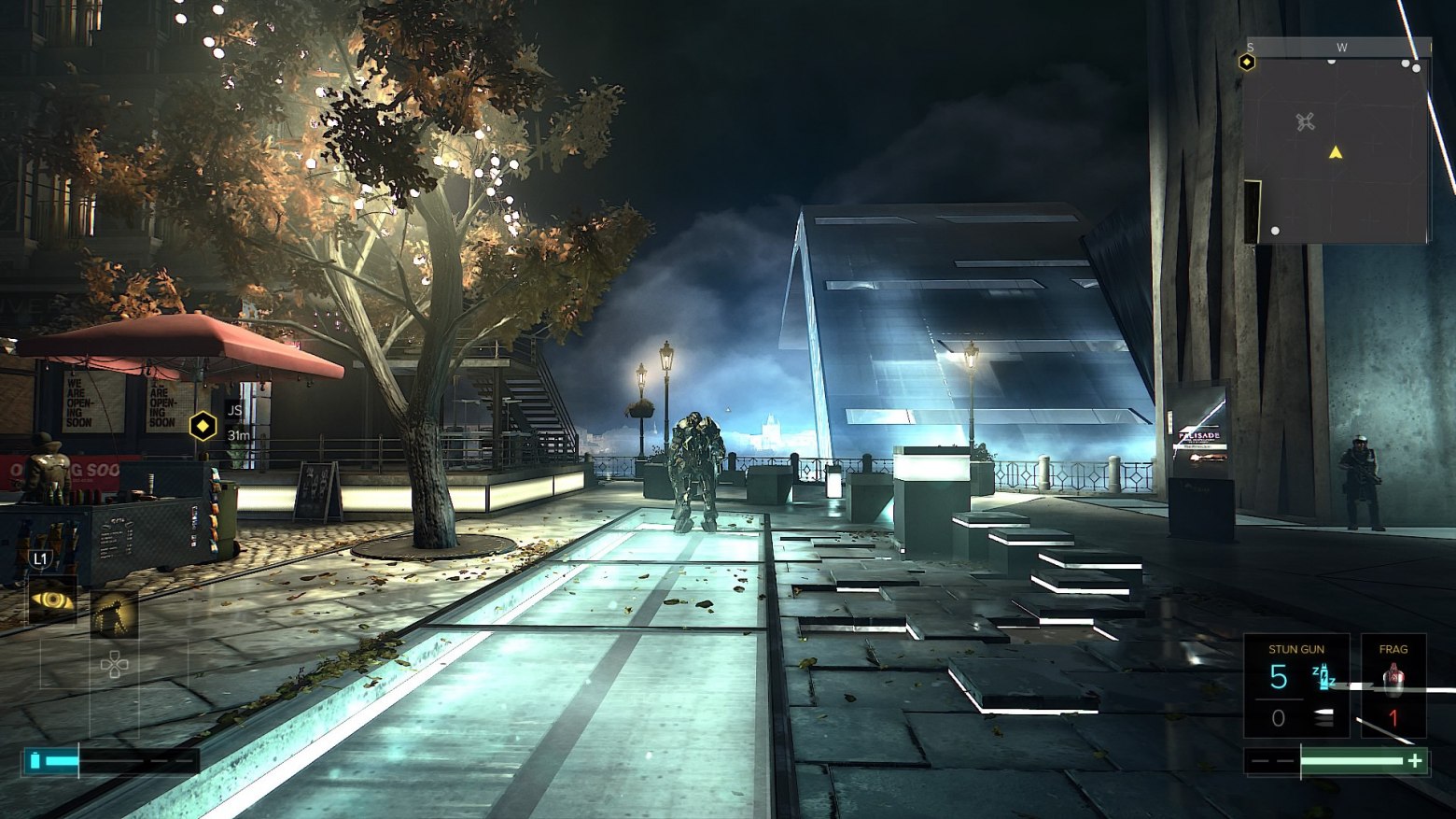
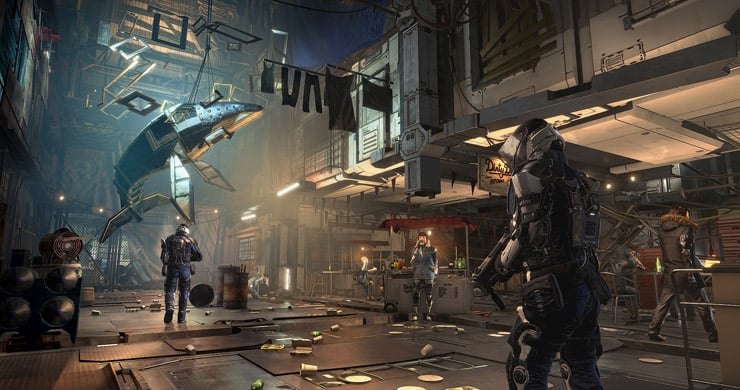
Můžete mi prosím říci, jak se dostanu do nejbližší kanceláře UNATCO? Ach jo, omlouvám se, otevře se až za 20 let.
The second characteristic feature of the game's visual style is landmark buildings: at most intersections there are memorable structures or buildings. Some of them are functional and can be used for jumps, for example, while others simply aid navigation.
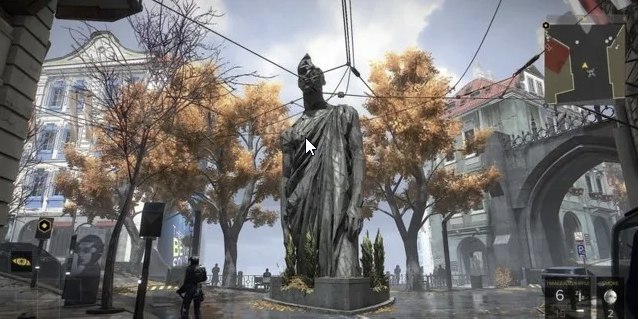
And more:
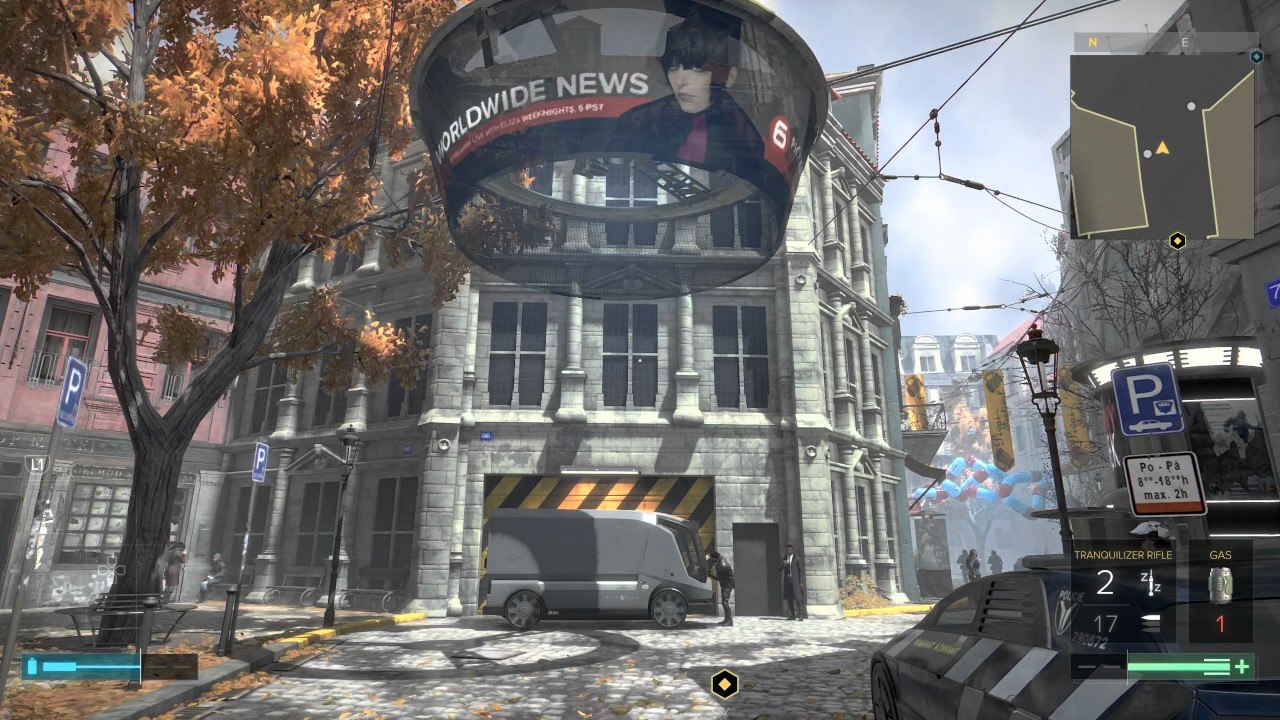
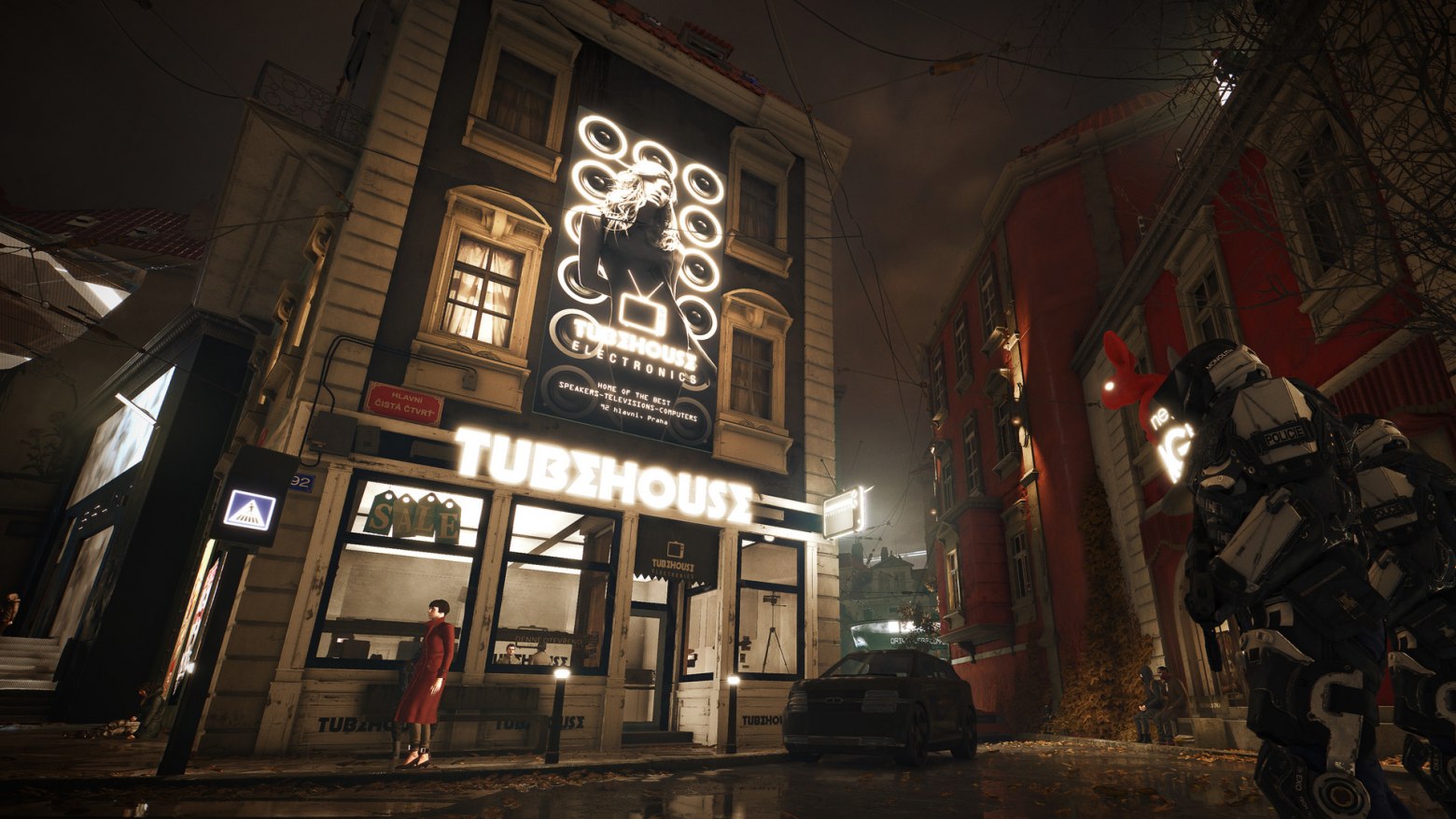
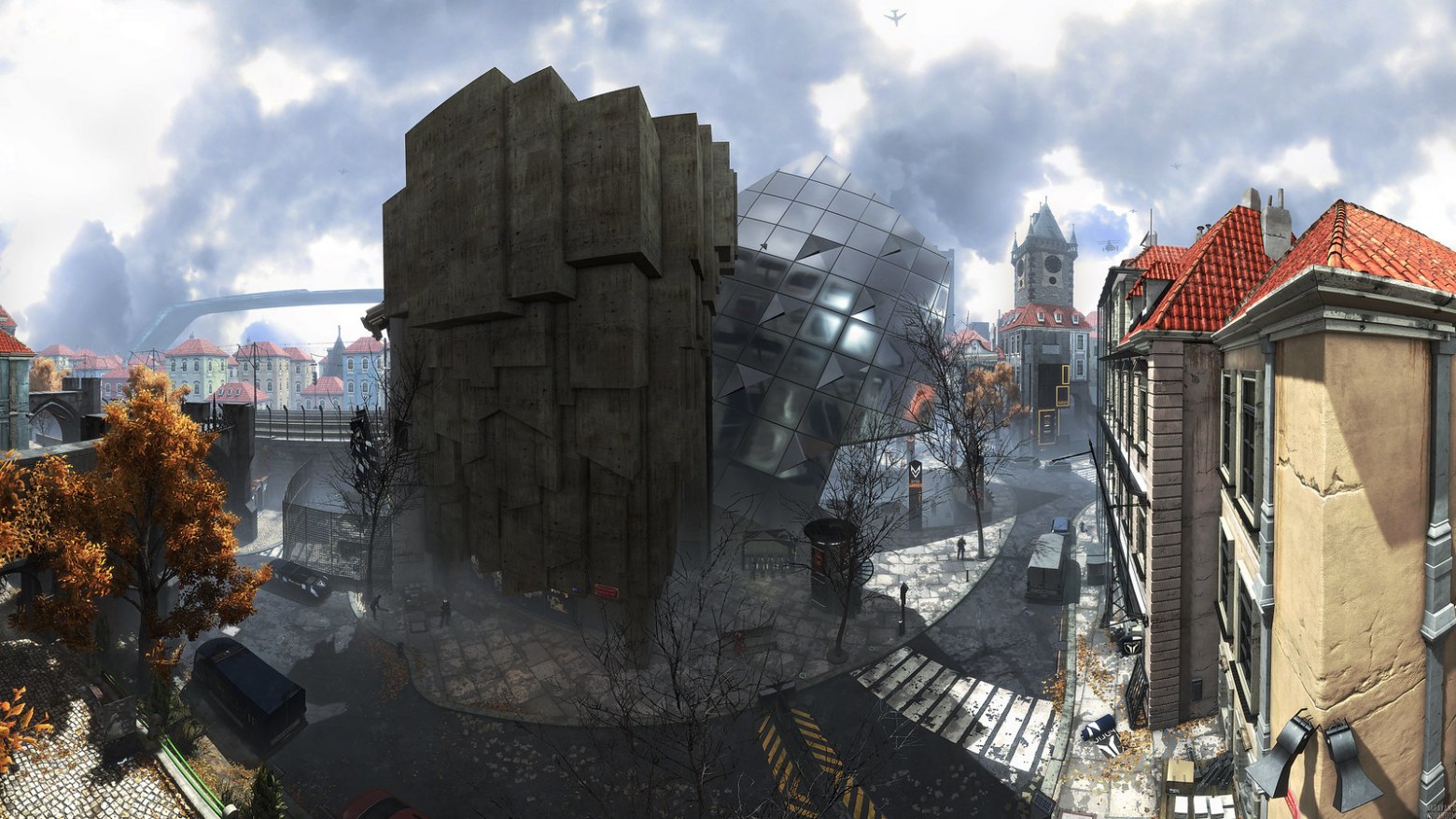
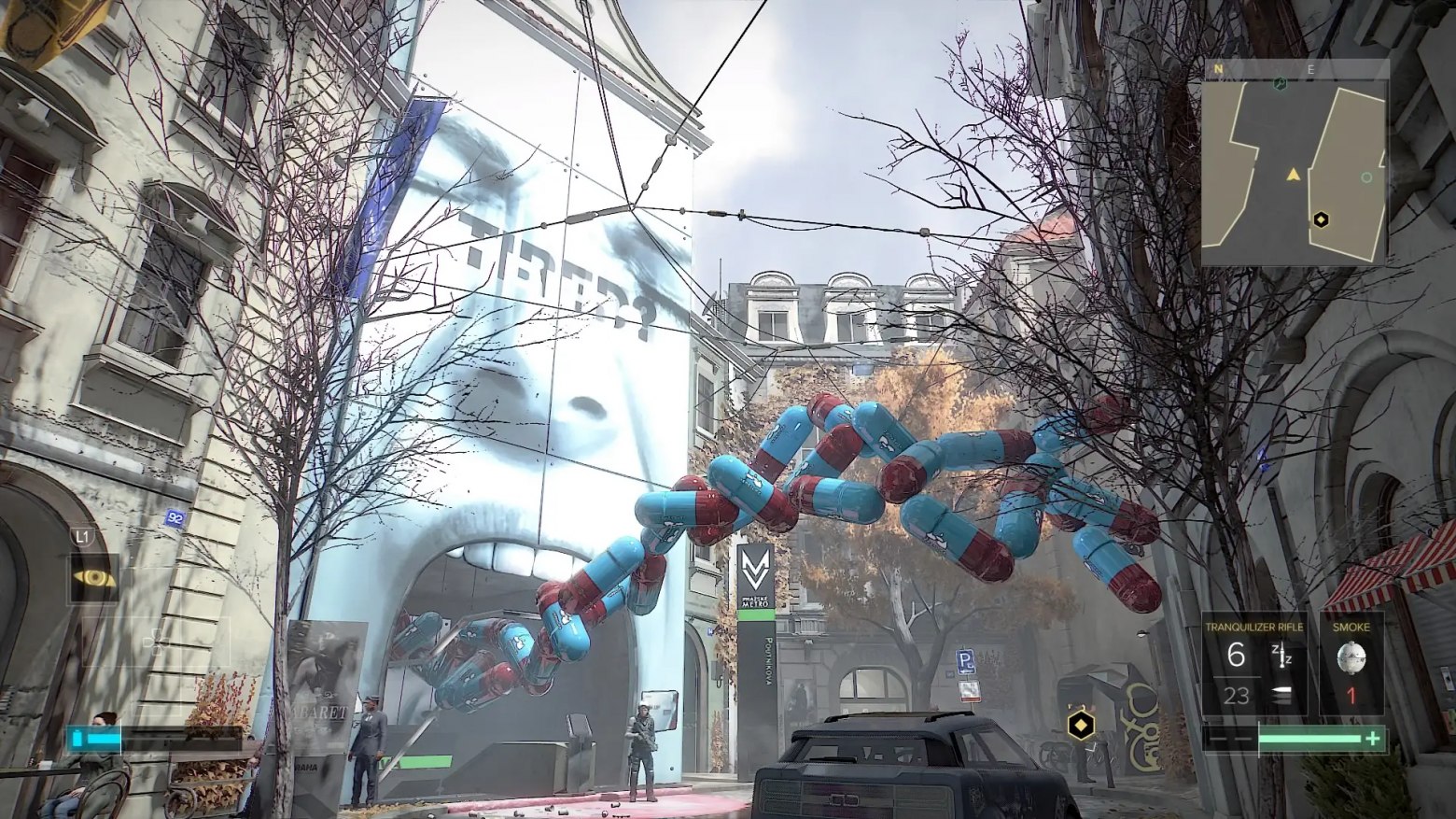
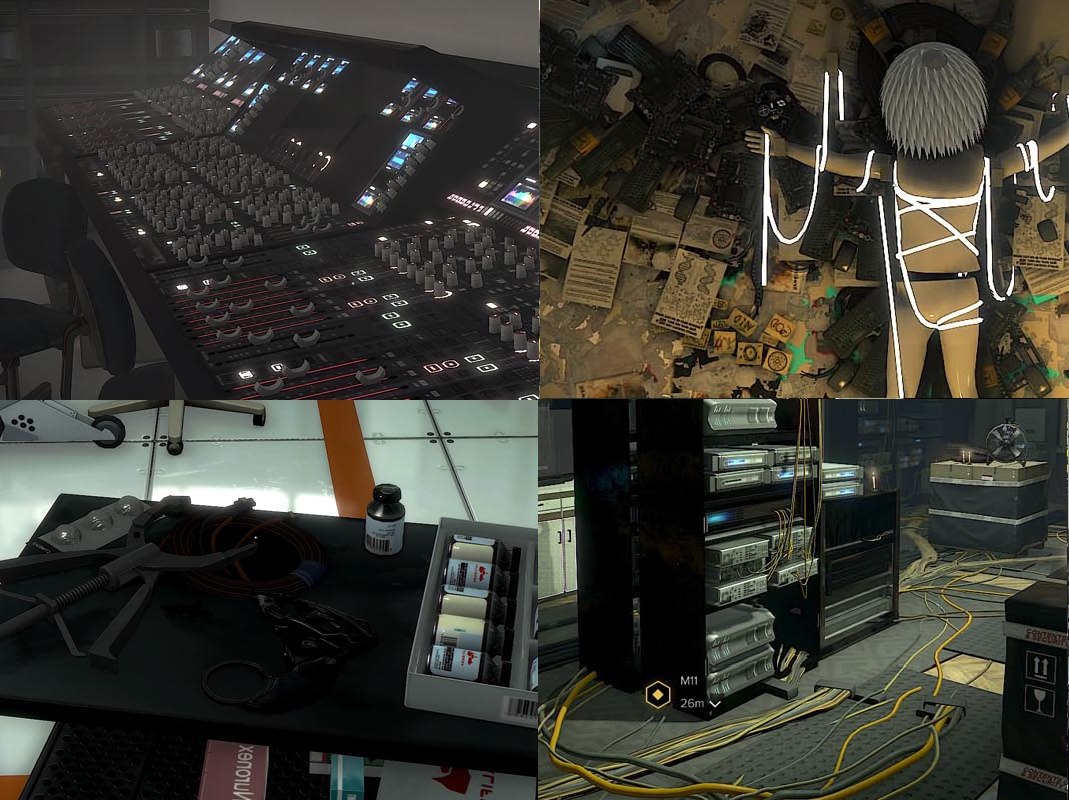
Attention to detail
The small game locations let level designers fill them with unique installation objects, and the powerful engine made it possible to show them fully as the developers intended. But they only did so a year later in the director's cut released for PC, where they added 4k resolution support and a new level of object detail, not skimping with blurry textures. You don't always encounter this level of detail even in recently released games.
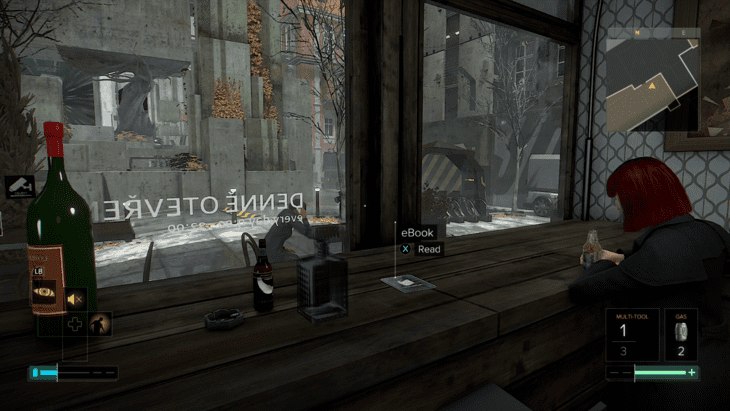
This attention to detail is also noticeable in the treatment of NPCs: citizens diligently stare at their phones, read newspapers or sit over a cup of coffee, and even toss non-story lines at the player, commenting on your actions, as long as you don't step outside the scripts. But stealing items laid out in front of a shop owner, shoving a pistol in their face or throwing objects all ends with the standard fall-down-and-shout.
Toto pivo by bylo mnohem chutnější, kdyby tam bylo trošku nejropozitinu
The only ones who react differently to the player's hostile actions are the police, but even they tend to forget all committed crimes after a couple of minutes, calmly strolling among the bodies of their fallen comrades.
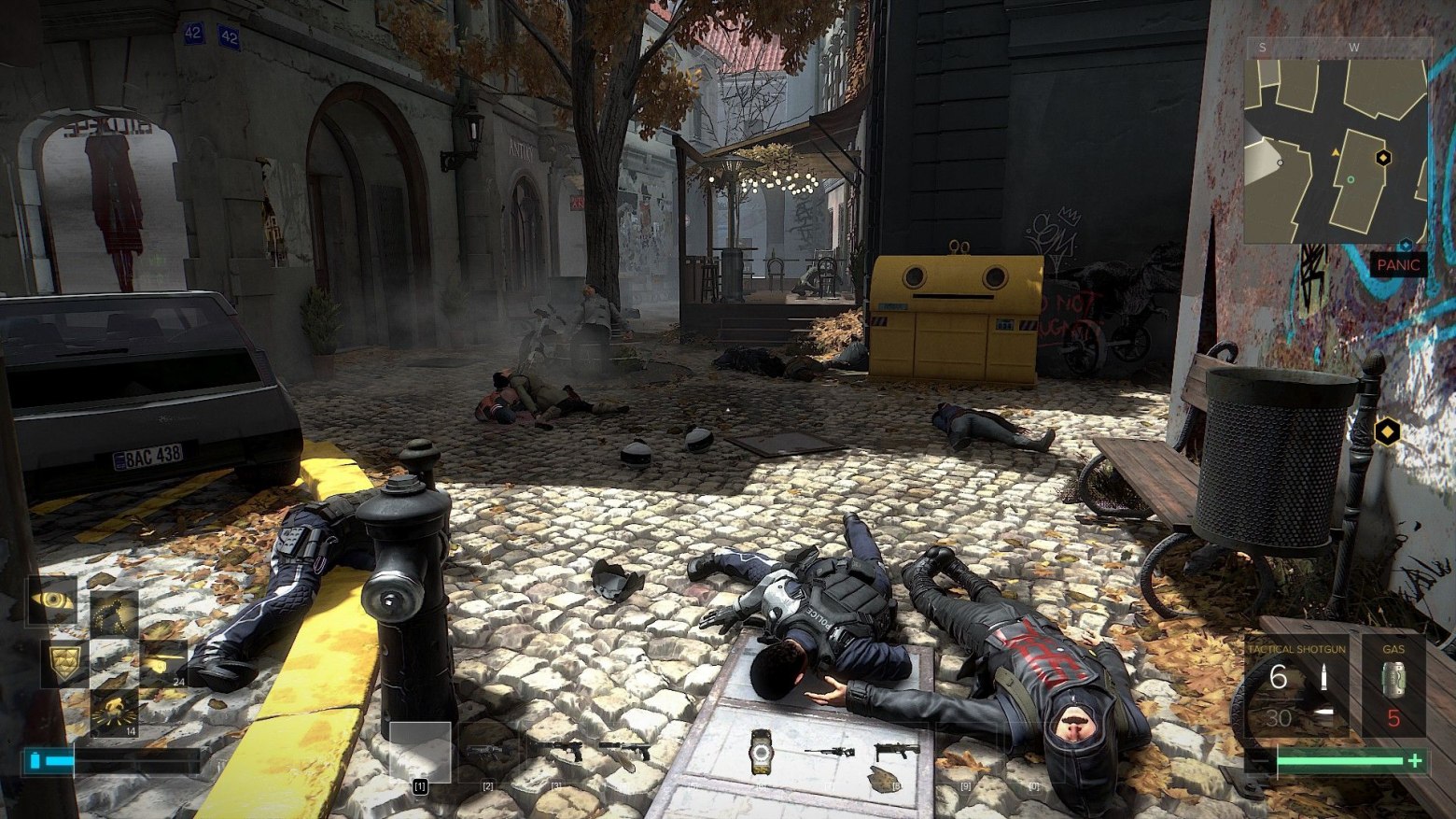
Dobrý den. Jmenuju se Adam Jensen, mužů zabít všechny v tomto městě. And more:
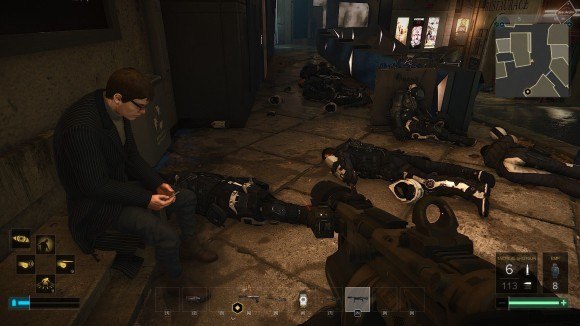
And this is attention to detail too:
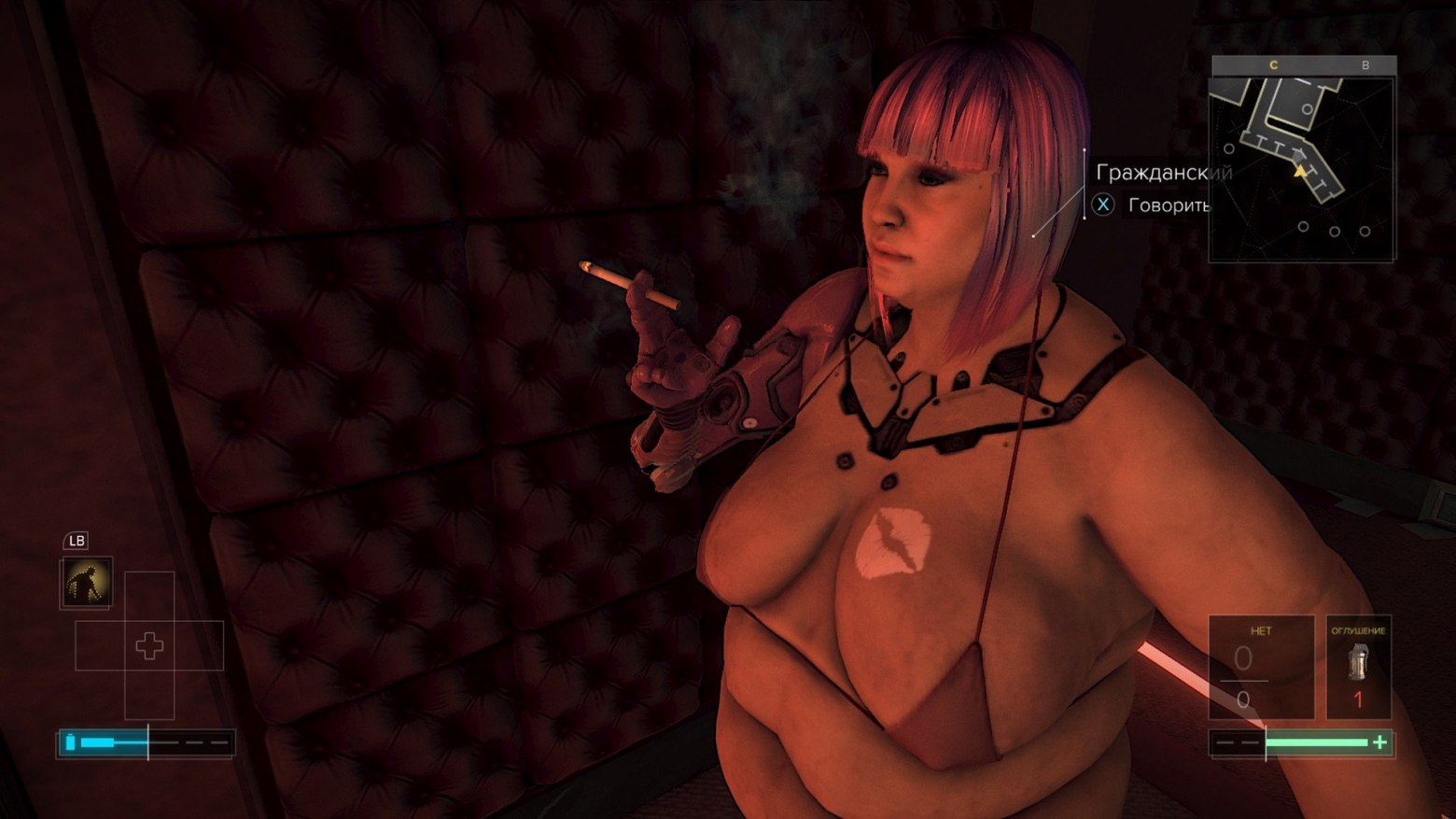
Máte ve vašem bordelu dívky s augmentacemi? Výborně, vezmu si obě dvě.
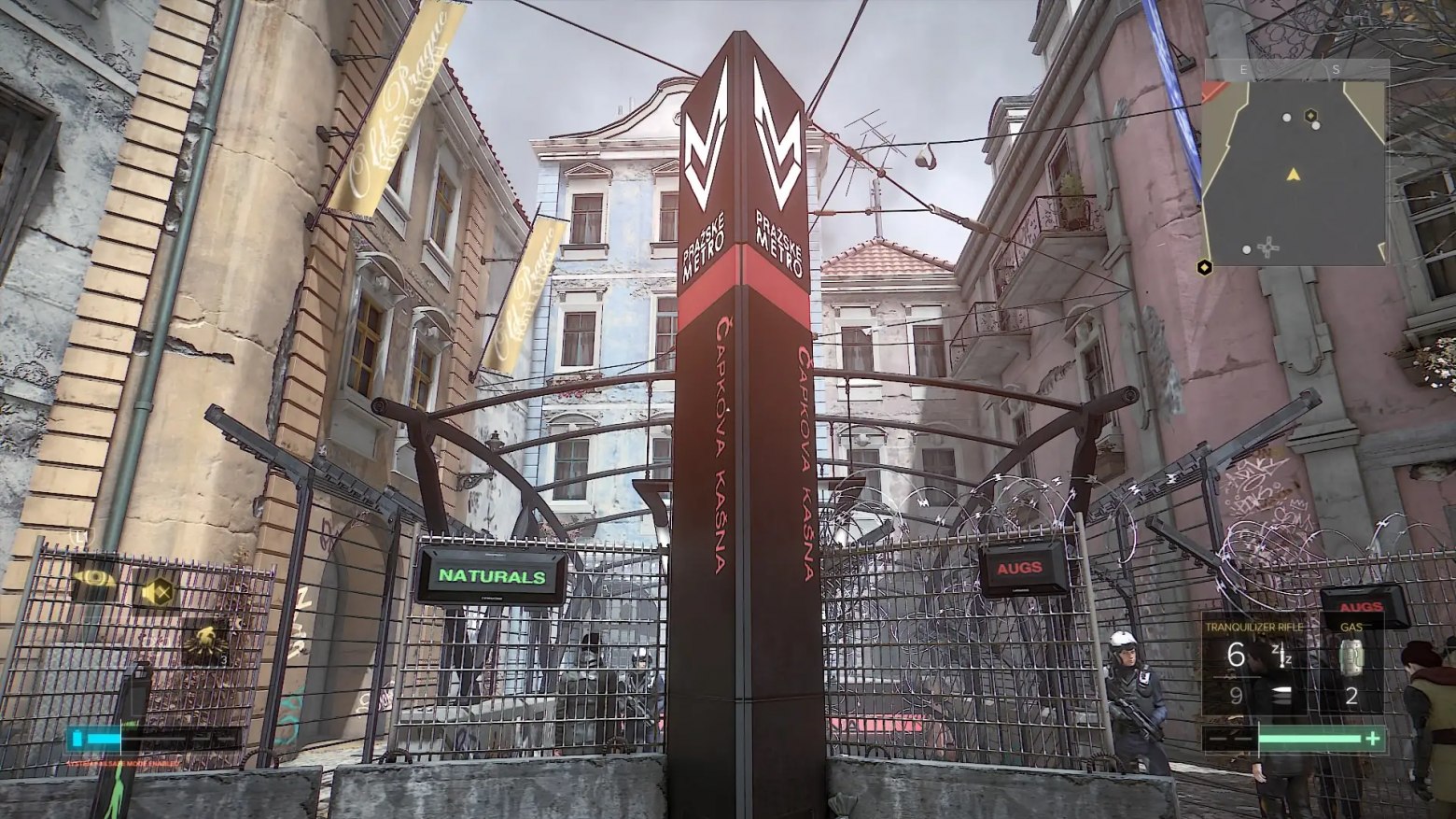
Back in the day, when Human Revolution came out and later MD, I enjoyed both parts. Despite the protracted development of the first part of the reboot, if you play the two parts back to back as one game, it nicely combines the free style of the original Deus Ex with the then-established gameplay of console first-person shooters. Unfortunately, Dishonored, released in 2012, raised the bar for vertical exploration sky-high and demonstrated a much better understanding of how to implement the concept of a free first-person game. But Dishonored had a different level of attention to detail, not as concentrated as the division into «naturals» and «augs». Throughout the whole game, frozen stories are everywhere — like police checking documents at the metro entrance.
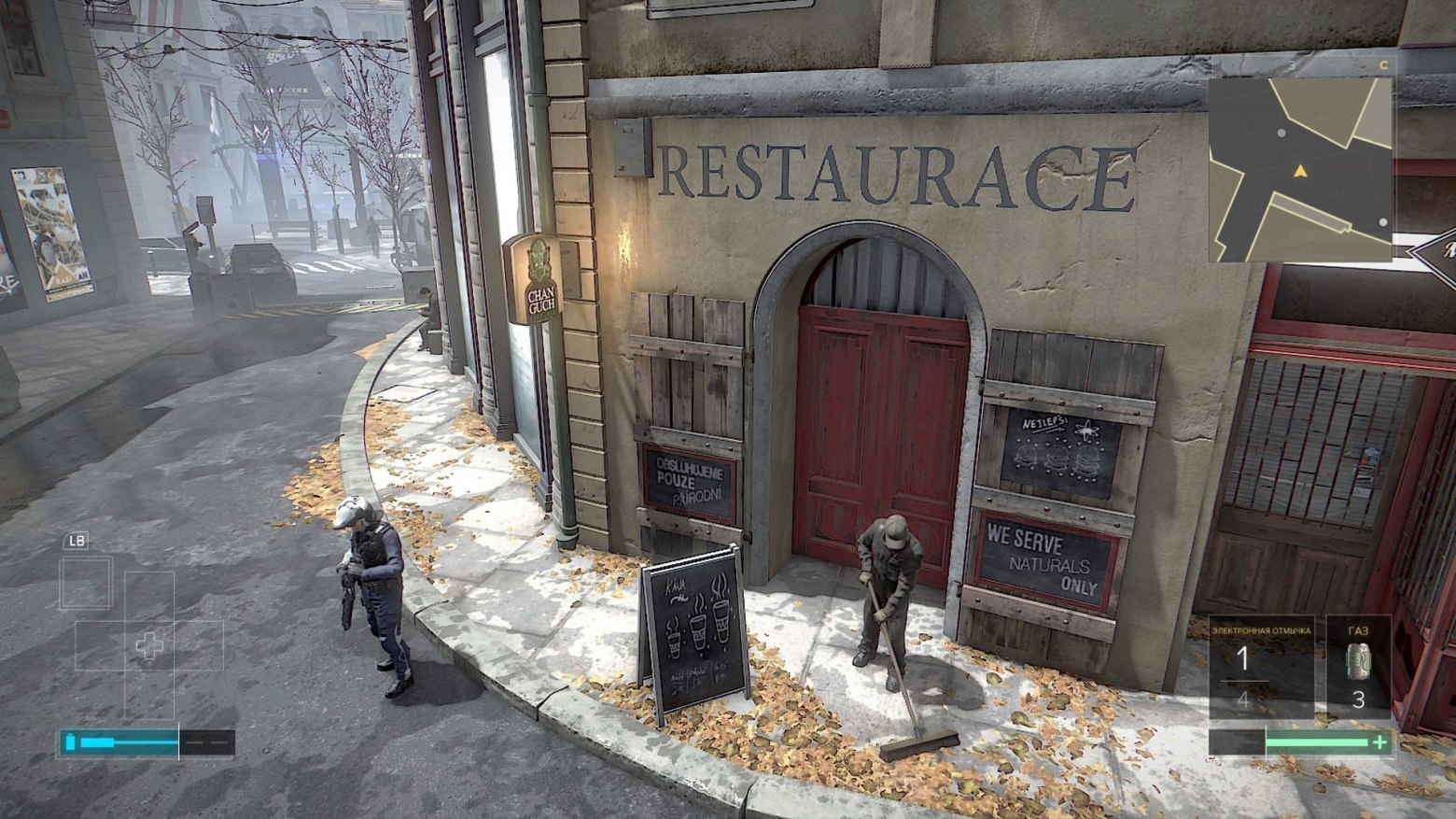
Or a little restaurant that serves only «naturals»:
Není nutné nabízet mi elektronickou cigaretu. Kouřim skutečné.
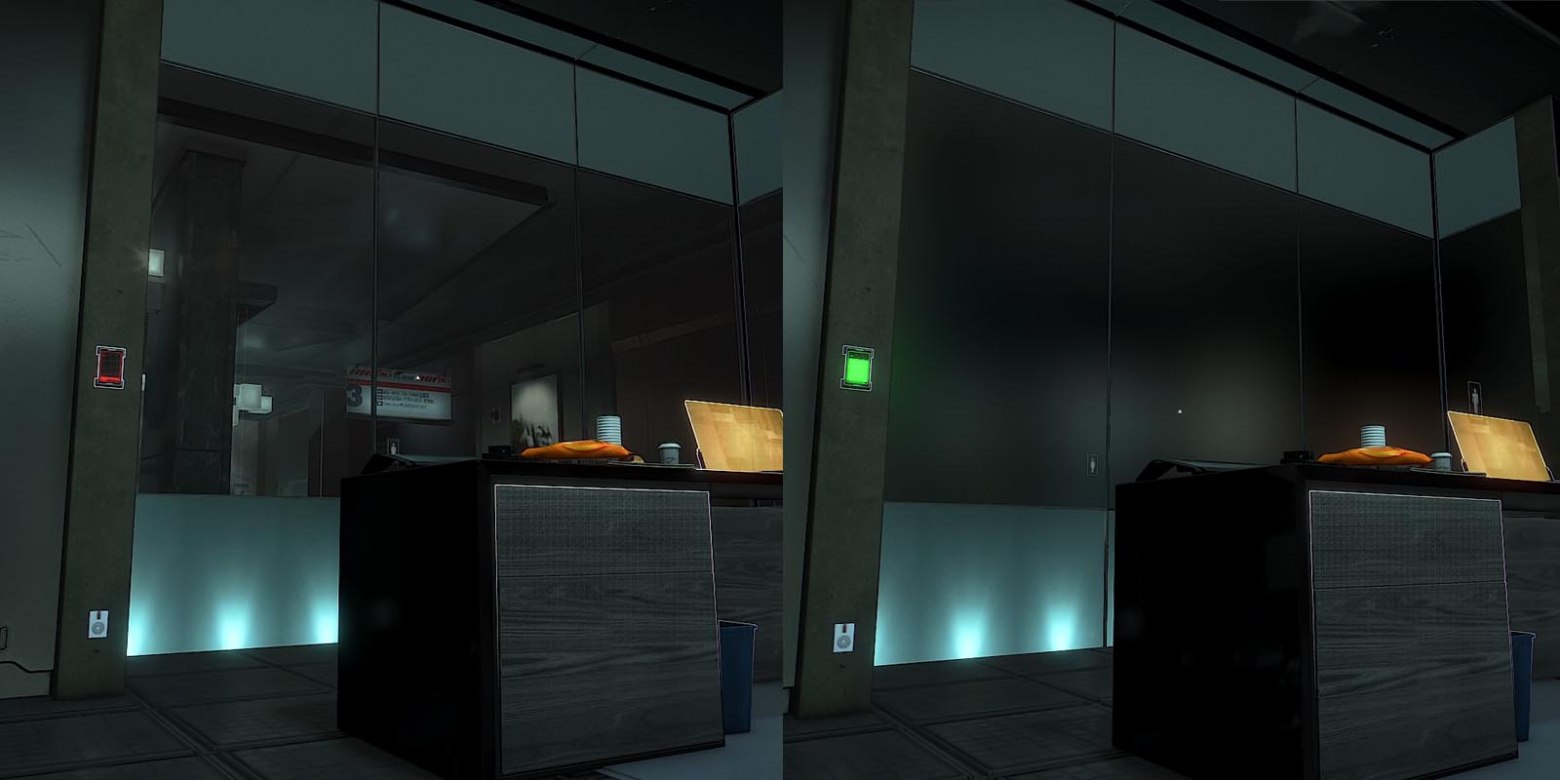
Attention to detail isn't limited to NPCs and their behavior — indoors you can draw the curtains, and if a guard is standing nearby, he'll go check who did it.
A relatively living world
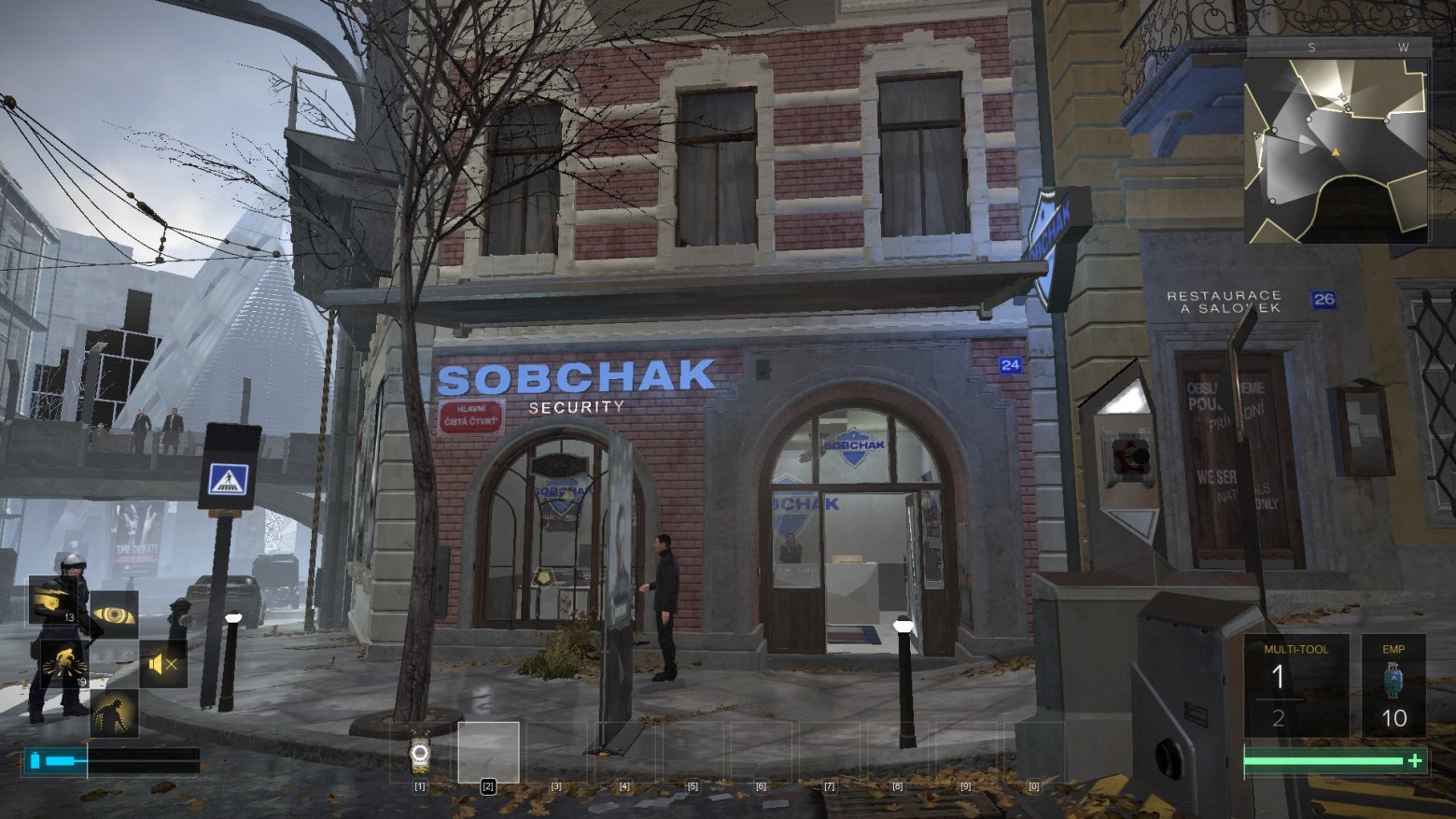
What the developers really didn't skimp on is the side quests and the environment's reactions to the player's actions. All the side quests are handcrafted, and you won't find two alike. Not all of them are interesting; I often noticed that individual quests are made with different endings, nonlinear completion paths and puzzles inside — clearly the work of at least a solid mid-level dev, and one passionate about the game. And right next to it, a completely straightforward one — go from point A to point B, as if slapped together by a junior yesterday. Another thing that struck me at the time is the attention to the player's optional actions: if you kill a shop owner or an NPC in the bank, then on your next visit the shop will be cordoned off, and there will be boxes with personal belongings in the NPC's office. If you go on a massacre in Prague, then on subsequent visits (and we'll return to the city two more times) there will be more police, they'll hassle you more often, and they'll swap pistols for rifles. Modern games don't really bother with crafting details of this level, because for immersion they give too little payoff in focus tests while costing as much money and time to develop as a parallel story branch. But on the other hand, if you don't break the surrounding world over your knee, it looks very, very decent.
The costs of a reboot
The most baffling mechanic in HR, for me, was the ridiculous energy replenished by chocolate bars — it seems it turned out as usual: a simple mechanic was left to the end of the project, and then they couldn't make it get along with what they had designed and left it as is, no point scrapping it. The fact that only the first segment of energy regenerated for free after depletion effectively forced the player to hoard chocolate bars and never use their augmentations to the full, except in very special cases. But the whole point of the game is using those very augmentations, and so it turns out that one underbaked simple mechanic broke all the others that depend on it. And yet the trailer shows exactly the continuous use of abilities, without any breaks — and what came out is that to do it like in the clip you have to eat a couple of bars mid-fight.
Even at launch this looked terribly dubious, and against the backdrop of the skill and energy system in Dishonored — where using an ability temporarily reduced part of the energy bar, which then began to regenerate — it looked, to put it mildly, unfinished. Reusing an ability before full regeneration drained the remaining energy, and Corvo had to drink the blue bottle to replenish it. This created a good balance between the cost of prolonged ability use and the freedom to use them to overcome individual obstacles without extra expense, so it's no surprise that Mankind Divided adopted this system almost entirely. But you can also just cheese it by enabling infinite energy and playing as a superhero, which is probably how it was originally intended.
Variability vs. story
Building levels in games of this genre is almost always done through various ways of completing — or not completing — them, and each imposes certain obstacles, puzzles and enemies. The player must always be able to reach any part of the level, with any set of available skills, and it doesn't matter how or which tools they pick for it. On one hand this yields a large number of connected locations, each of which can be tuned at runtime depending on the player's chosen play style, bringing elements of a roguelike and procedural generation into the game. But in reality, building such behavior-base levels is a hard task even for seniors and leads with shipped projects behind them. Moreover, each alternative completion path should ideally change the state of the whole system after completion. But this is used very rarely, again because for all alternative playthroughs you have to script changes in the story, yet each player will see only one of the 10 scripted ones and won't replay the game for the sake of these changes.
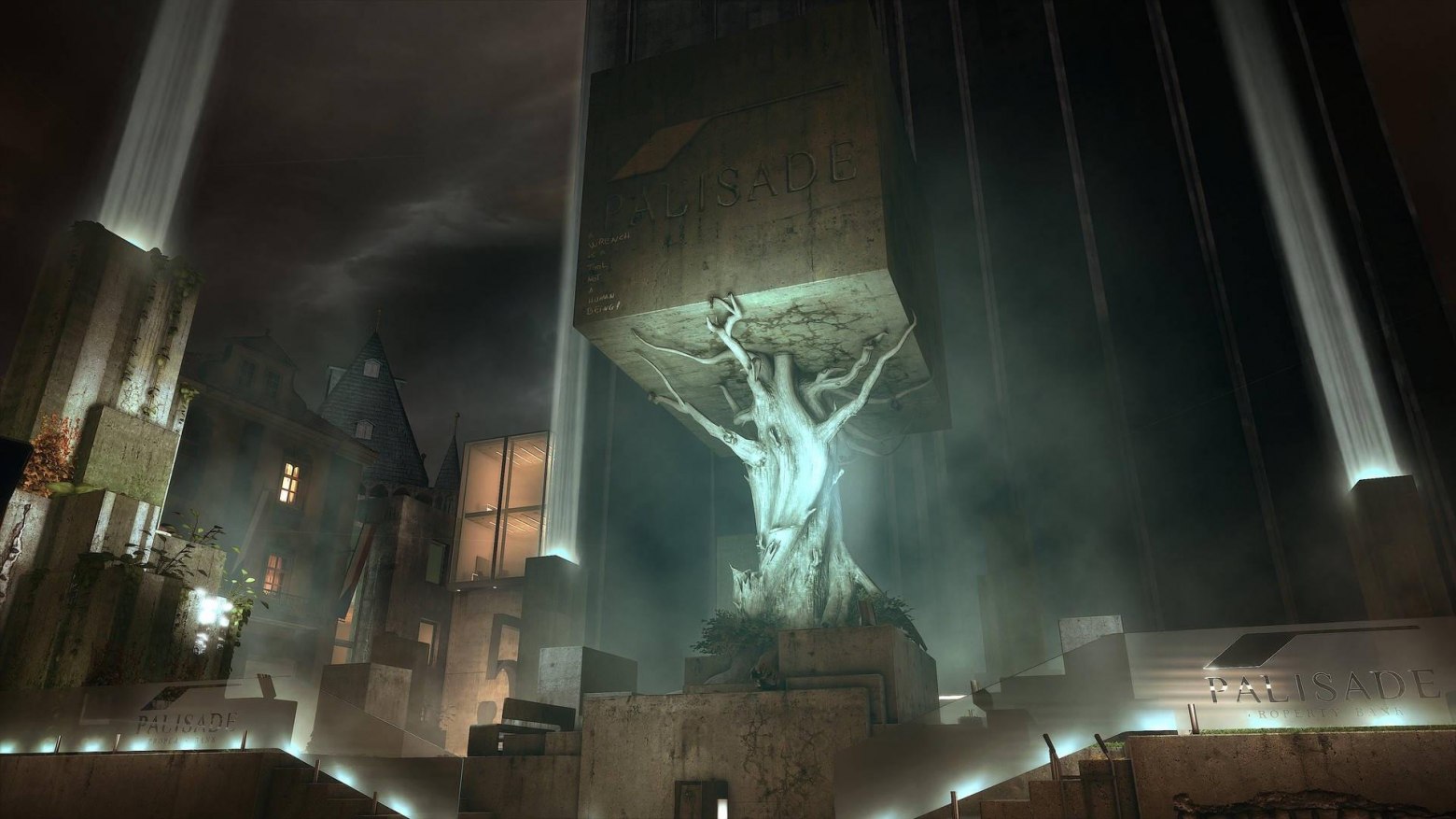
Víte, že ve sklepu kanceláře Praha Dovoz je vícepatrový komplex tajné organizace Task Force 29? Proč se smějete?
And if you don't script changes in the story, the game gets branded a rail shooter without variability, which for an immersive sim, you'll agree, doesn't really fit. And so it turns out that the presence of a story keeps the game from being too variable, while attempts to expand the story with alternative ways of completing tasks lead to it bloating and to large time and engineering costs to implement — costs that a very small group of players is able to appreciate.
The protagonist's skill system is also tied to the variability of level completion — I'd like to say it's the other way around, but no. If you look at how locations are placed on the levels, you'll see there are always only three ways to get into buildings: force, stealth and abilities (mostly breakable walls). But there are far more infiltration-oriented abilities, and there are no, or almost no, places to apply them — gassed rooms or electric traps don't count. If a glass window or door isn't broken by a script, you won't damage it with anything — not a bullet, not a grenade, not a nanoblade.
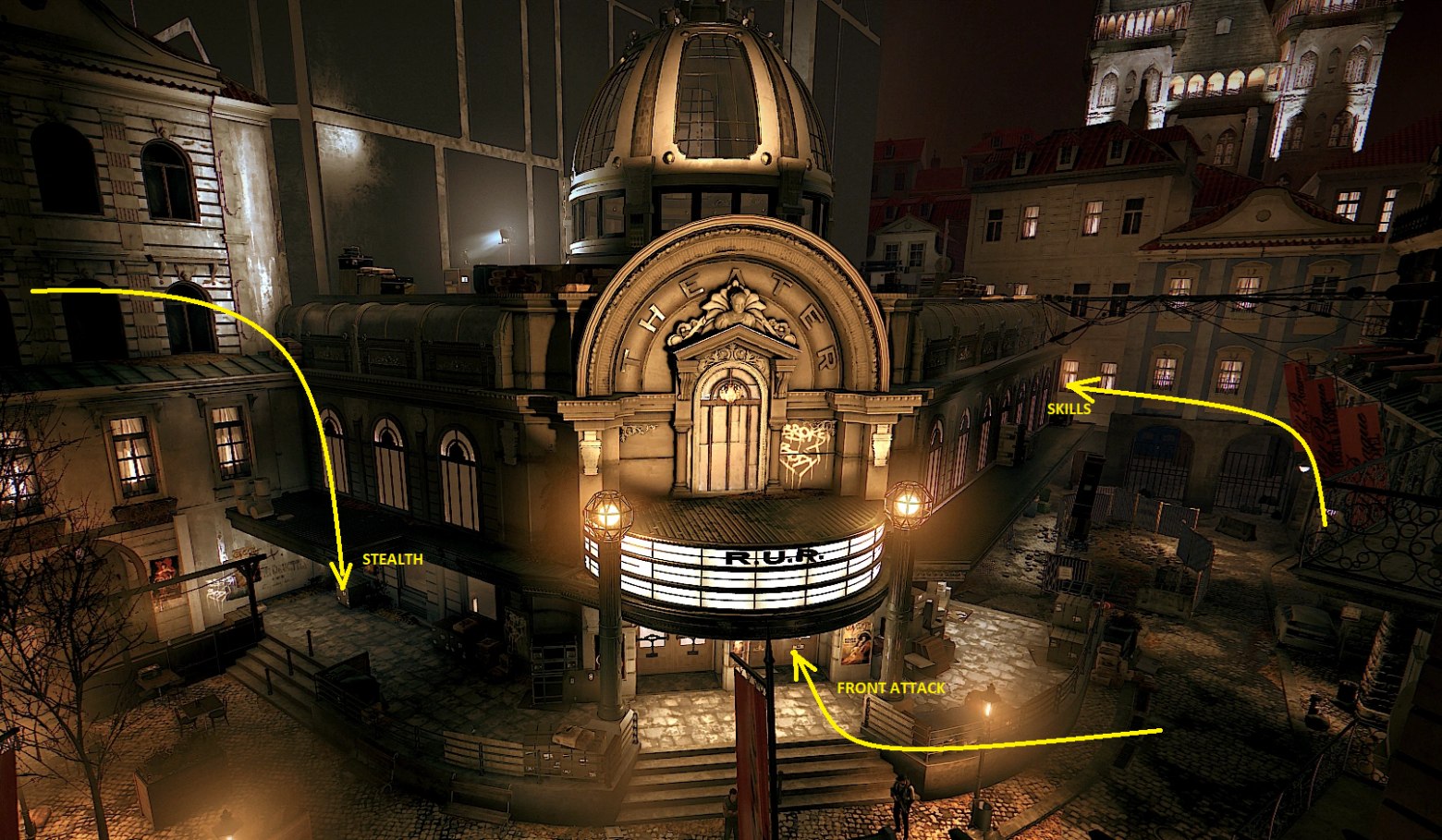
However, the realization of this comes closer to the middle of the game, when, having played around with the abilities, you start to notice the small things — like artificial bottlenecks in narrow spots or invisible walls that don't let you jump onto a roof or balcony. This, however, doesn't stop MD from following the idea of the original: the main choice you face is which route you're going to take, not whether you can afford it. At the same time, the developers actively encourage vertical gameplay — across Prague there are locations on the rooftops to explore. And vertical gameplay isn't limited to the streets; in tall rooms there will almost always be suspended ceilings or structures to move along.
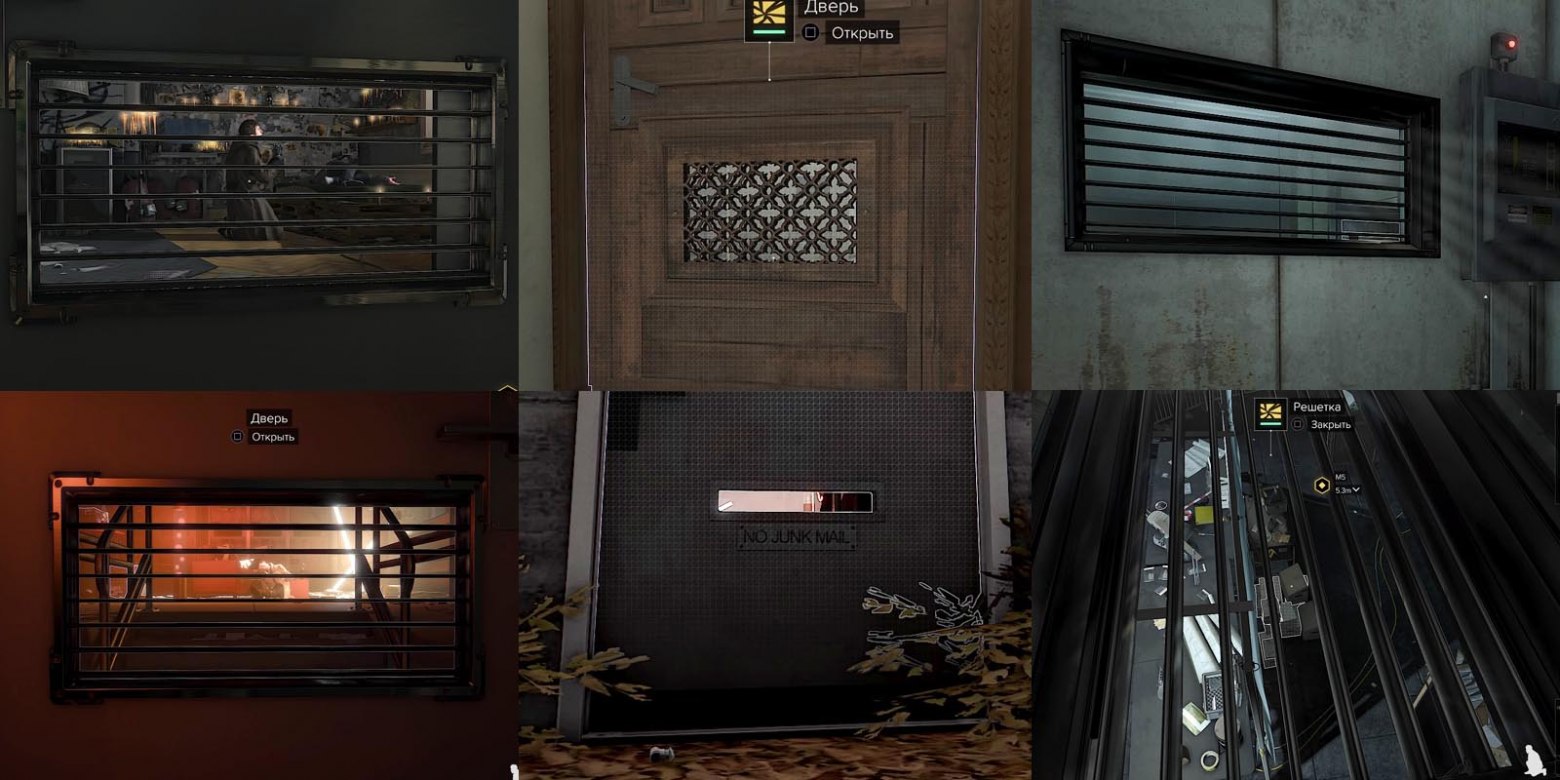
The alternative completion paths also emphasize attention to detail every time: somewhere a passage hidden behind a fridge, somewhere a hatch in the ceiling, but almost always as you progress you can peek into a half-open mailbox, a viewing window, or open a grate.
Freedom, stealth and consequences
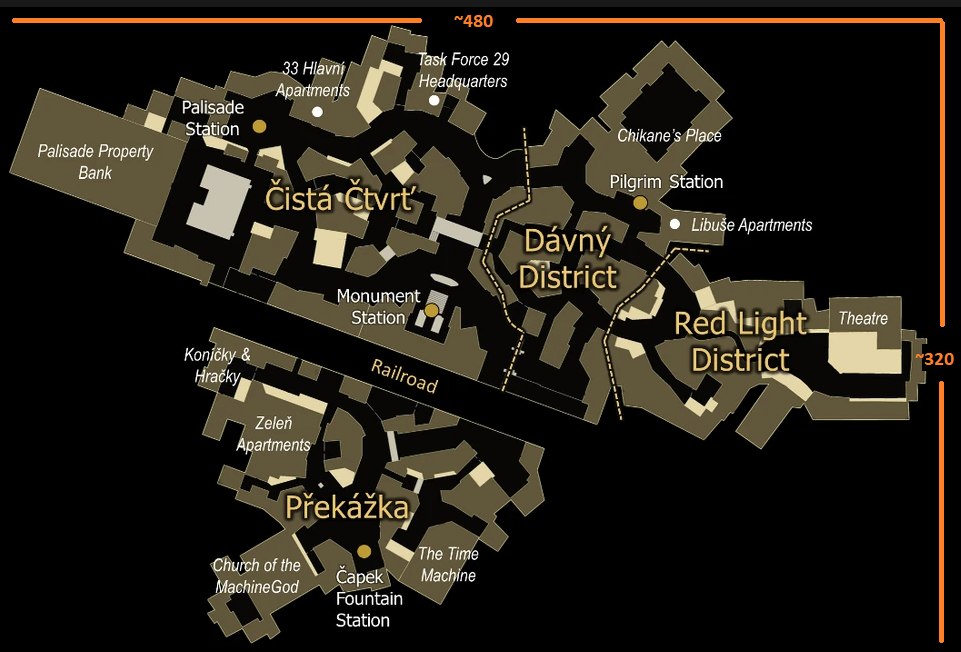
Freedom of choice ends where the transparent walls begin. I'll admit that at first I was disappointed by the level design in Mankind Divided during my first playthrough — I wanted to go stealth with minimal damage. The small Prague hub has a surprising number of hidden spots that were interesting to explore, but they all turned out to be small, insignificant and added nothing substantial to the story, except for crafting parts. Meanwhile many story areas, like the bank, the casino or the theater, are accessible right away, without any restrictions. Seriously, the game adapts to the player's choice as much as possible — for example, it turned out you can take out story-important characters (not all of them, of course), and that was an unexpected experience. At the start of the story, after the overheard conversation between the mafia boss and his lieutenant, you can put that very boss down — it's actually amazing that the game let you do this.
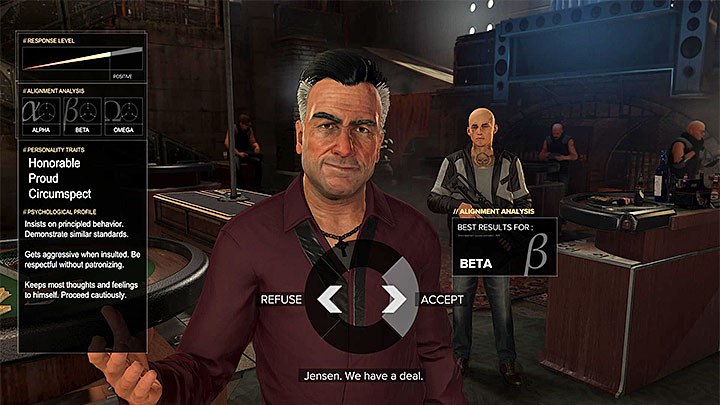
And when I had to return there by the story later, he stayed dead, and all the needed information was on his computer. As it turned out, I had deprived myself of a couple of interesting side missions. It's a small example, but I liked how organically such a reaction to the player's actions is built into the game. And I've gotten used lately to games explicitly showing me what I can and can't do. And even if it's not the most significant game character, he exists in the game long before the story requires his appearance, and he's there doing something, walking around without the bulletproof-glass protection so beloved by most AAA games — and now think about how many players never even got to him. On Steam the completion rate of the quest line with this character is under 30%.
Prague also strongly evoked City 17 from Half-Life 2 — a very depressing area of sorts, humanity's golden age is over: garbage, police and aug-bums are the game's main way of conveying this. The guys clearly looked back at it both in appearance and in atmosphere. And you know, it grabs you — for me at least, the atmosphere of a dying city became one of the hooks of the game design.
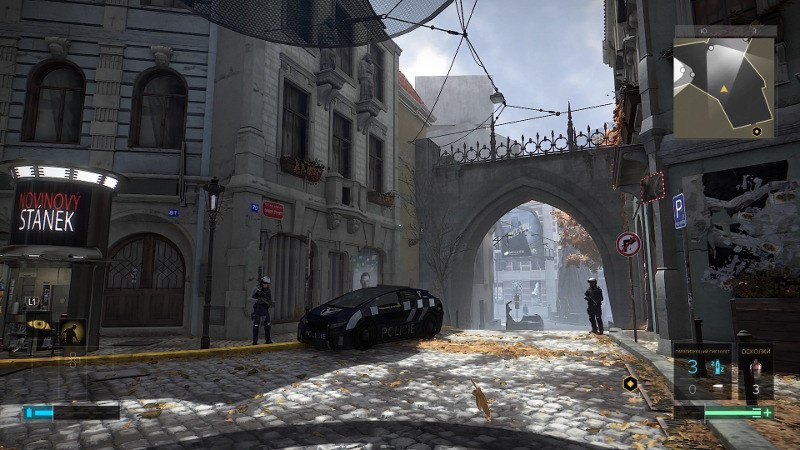
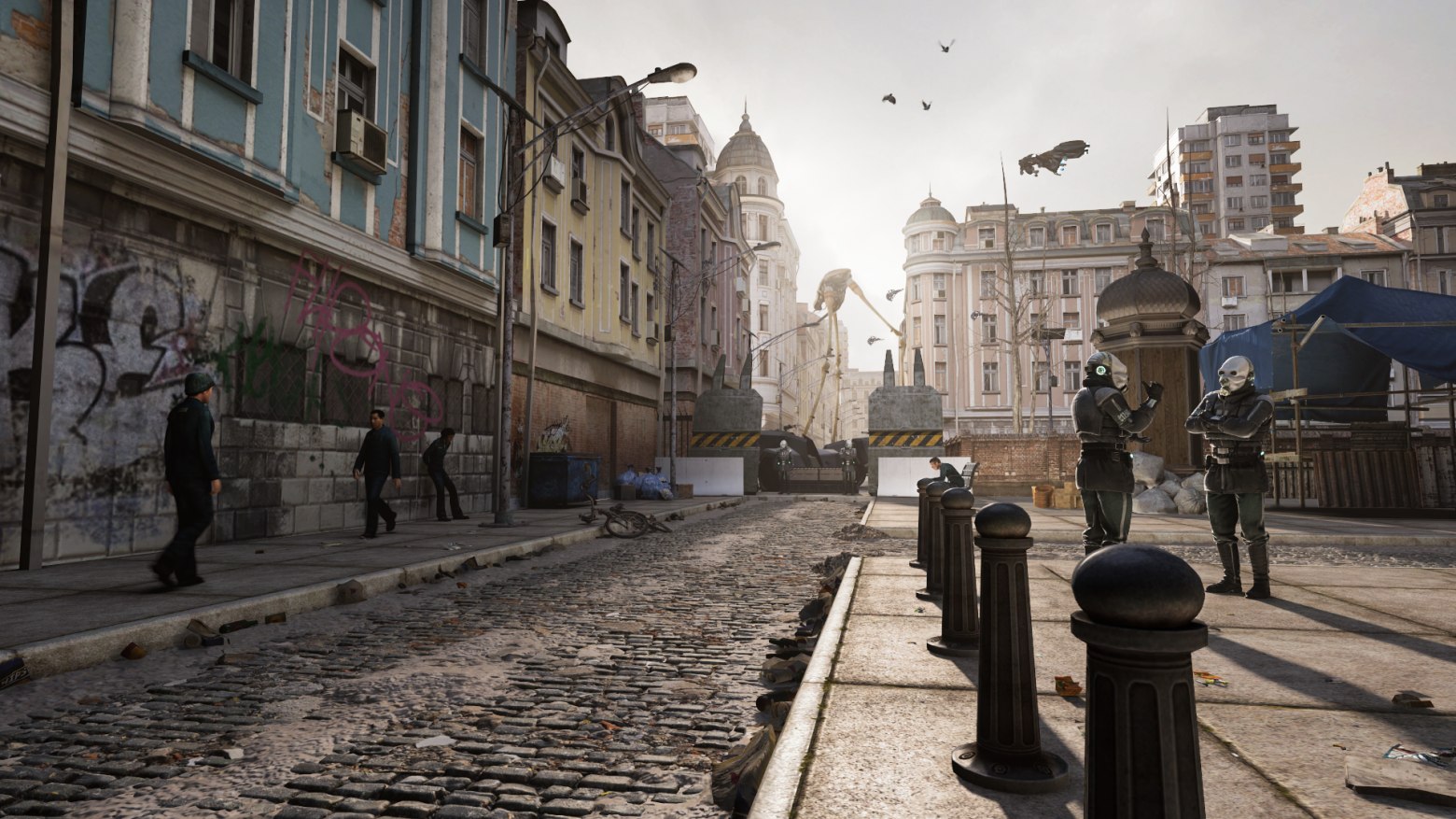
Looks alike, doesn't it? Sometimes it seemed to me that even the graffiti was similar.
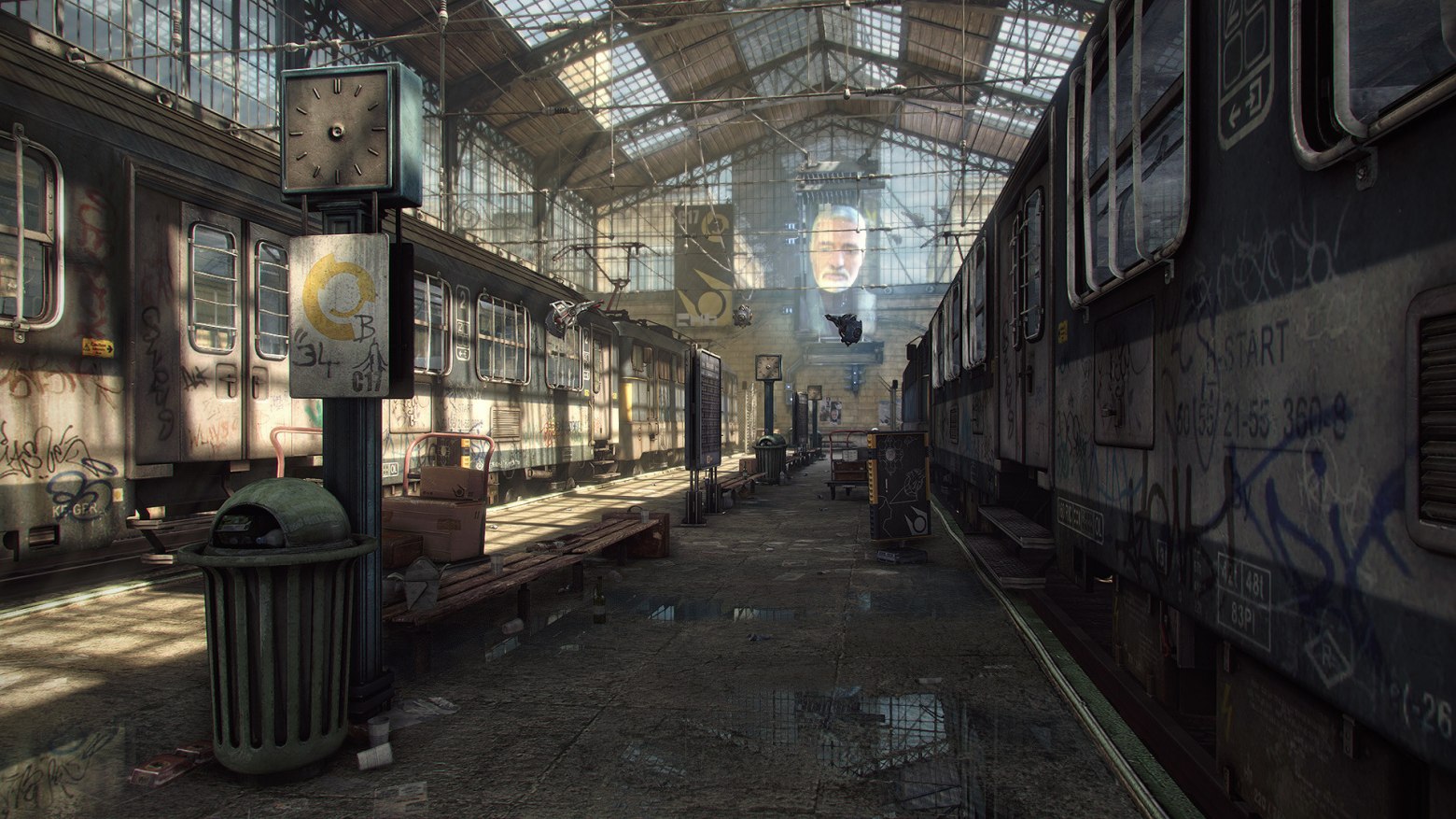
Deus Ex: Prague edition
Even though the game doesn't use the engine's full potential, at the time of release it looked beautiful and high-tech. And the presence of an interesting world, memorable both visually and in atmosphere, with its own lore backed by stories and the game environment, draws you in. The game rewards players for exploration and curiosity with information and items. And the high density of game events on locations of such a small size, and above all the developers' ability to make this little world interesting, puts the game on par with larger and more sweeping projects.
 ← All articles