
The history of consoles is not only battles over teraflops and holy wars between fans over whose sprites are squarer, but also gifts to the development industry, to the fans themselves, and separately to developers — gifts that at first looked like one vendor's quirk and some time later became a standard without which you could no longer sell a console to an end user. The cartridge, the friends list, the analogue stick, the removable memory card — somebody thought of each of these first, usually for a specific piece of hardware and to solve a specific problem or to enable a new game, and usually without understanding that they had just laid down a standard for the next thirty years.
In this article I will walk through the main moments and what they gave the developer that stayed in the foundation of game development. Sometimes the gift is technical, like Mode 7 or PCM sound, sometimes more infrastructural, bringing licensing or achievements, and sometimes it simply changed the way a developer, a particular company, or the whole industry thinks. As usual in our swamp, every gift normally came with hidden rocks, and I will try to tell you about those too, because everything has its price, and game development loves to invent first and suffer through it afterwards.
The wild, wild west
Before Fairchild gave the industry the cartridge, there was nothing to separate at all, and the first five years of home gaming were spent in a world where the console and the game(s) were one and the same lump of plastic and wire, and the words "game library" meant a physical stack of circuit boards.
The Magnavox Odyssey of 1972, conceived by Ralph Baer, was both the peak of that approach and its dead end, because inside there was neither a processor nor memory in the usual sense, just analogue circuits that drew a couple of squares and a dot on the screen, while the different "games" were switched by plug-in boards that literally rewired the circuit a different way — that is, a game could not be written, it could only be designed. Boards for table tennis or for target shooting were sold separately, but that was an extension of the circuit, not of the content. And the same box came with plastic overlays for the screen, because the Odyssey simply could not draw colour or a background, so part of the "graphics" the player was obliged to stick onto the television by hand.
In parallel, in that same 1972, Atari rolled out the arcade Pong, and it was the arcades, not home consoles, that were the first real gaming industry in the economic sense, because the cabinet stood in a bar or in a cinema foyer, earned quarter after quarter, and the developer got, for the first time, clear feedback straight out of the machine's coin box.
The arcades were also the first to arrive at the idea of "pay per session" rather than "buy the thing once", and that monetisation idea sits squarely inside modern free-to-play and live-service mechanics half a century later — I will come back to it towards the end of the article, only now the quarter has been replaced by a battle pass and coins.
Home consoles of those first years paid for their simplicity. First, with squalor, because a game hard-wired into the circuit physically could not receive a patch, an update or a sequel, and the Coleco Telstar and dozens of its clones of the mid-seventies literally stamped out the same tennis circuit under different stickers until the market sagged under the weight of the clones in 1977.
Second, the developer paid — or rather the engineer, because there was no programming language, no devkit, and no division at all between "those who write the game" and "those who solder the board": they were the same people, and the whole creative process came down to the thickness of the soldering iron and the heat tolerance of the human being.
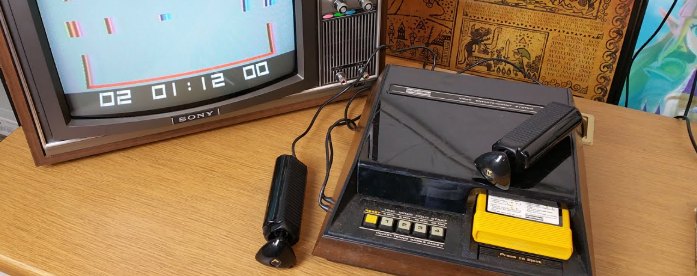
Fairchild Channel F
If before this console the home gaming machine and the game (more rarely, several games) were one lump of hardware baked into silicon at the factory — and that is what you would be playing until the device's dying day — then in 1976 Fairchild added swappable ROM cartridges to the box, which turned out to be a change to the entire economics of home consoles and determined exactly how games would be sold for the next three decades.
Suddenly a game could be developed and updated, published, sold, rented out and collected separately from the box. And the whole industry, in which the very notion of a publisher separate from a developer would later appear, along with dedicated shelves in shops for games, release dates, and indeed such a thing as a "game library for a platform", grows out of that moment 50 years ago — so yes, the cartridge, or rather the game as something separate from the platform, is FCF's most important gift.
The developer had now unlocked the achievement that a game is a separate product on a medium — well, not quite so nowadays, but still — rather than a property of the heavy "iron" sitting in front of the television. Every subsequent generation played by the new rules, while Fairchild itself quickly gave way to Atari: being first does not mean surviving.
The flip side is that the cartridge not only separated the game, it also froze it in ROM, and a baked-in bug would travel to the player forever, since there would be no patches for another twenty years or so — though the consoles themselves suffered from the same thing, at least they could be reflashed. On top of that, manufacturing was long and expensive, so the entire risk of an unsold print run landed on the publisher as hardware in a warehouse.
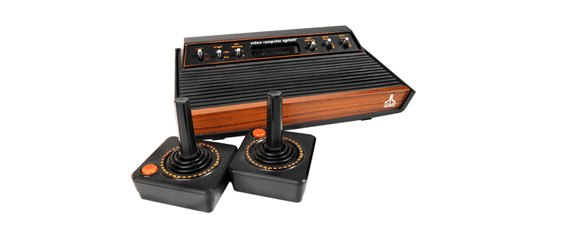
Atari 2600
The 2600 itself (1977, MOS 6507 at 1.19 MHz, 128 bytes of RAM) had neither a frame buffer nor a dedicated video processor — separate video devices in the modern sense were not even a thought. The console generated the picture on the fly, and the code had to synchronise with the electron beam literally cycle by cycle, which I have already written about in "How memory works in game consoles" on Habr. If your logic in the vertical blank ate ten cycles more than it should, the next scanline would be drawn incorrectly, and that determined how much logic you could cram into the game itself.
But what the console is remembered for is that it gave the world the profession of console programmer as a craft in its own right: there were no longer "programmers in general" but people who keep in their head how the game's logic runs on the device, because an ordinary programmer could not always cope with that, and did not always need to.
The second gift, far more important for the industry, was the emergence of the institution of the third-party publisher. It was "birthed", if one may put it that way, by former employees of that same Atari, who left and founded Activision (1979), winning in court the right to make games for somebody else's hardware. That is how the "platform plus independent studios" model of the industry appeared, on which everything that came after stands. The crash of 1983, incidentally, grew out of the flip side of that same freedom, but that is a plot for the next article, "The graveyard of ideas".
But the flip side of the Craft was people who could do nothing except "race the beam" and whose entire experience was nailed down to a single platform. From here too grew the cult of the heroic hack and the attempts to cram a game into 128 bytes of RAM and a couple of kilobytes of ROM by cheating the beam, physics and the laws of physics. And cheat they did, dragging into the light of day the caste of Wizards. The industry is still curing itself of that anti-pattern of the "wizard-programmer with undocumented mastery of black magic", and it was bred right here, on the first mass-market hardware, where there was simply no other way.
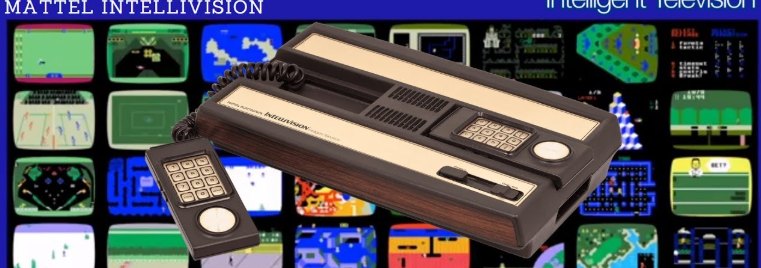
Mattel Intellivision
The Intellivision (1979) offered developers a system firmware called Exec, which contained a set of ready-made subroutines that games called instead of writing everything from scratch on bare metal every time. Exec became the prototype of what we today call a system API and SDK, and was in essence the first console SDK, where the platform gives the developer services and not just access to the processor, a manual and the workarounds described in the errata.
There was also PlayCable — delivery of games over cable TV, that is, digital distribution a couple of decades before Master Gabe even gave a thought to the very idea of delivering bytes through a network rather than through a shop shelf. But technically it was a dead end of its time, because the technology appeared far earlier than an ordinary player could accept it — why pay ten bucks for the ability to download one new game when you could walk on your own two feet to the game shop or the rental place and get a choice of hundreds of titles for the same ten.
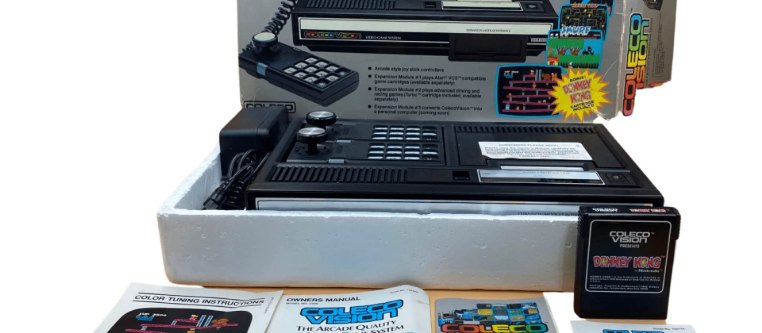
ColecoVision
ColecoVision, trying to pull part of its competitor's market onto itself, released an expansion module in 1982 that let you play Atari 2600 cartridges, demonstrating the possibility of compatibility through a hardware add-on and giving the industry the idea of porting game libraries. Technically, inside there was almost the complete hardware guts of the Atari 2600 itself (the TIA chip and others), that is, the console simply ran somebody else's hardware inside itself rather than emulating it in software.
But a more significant gift was the use of off-the-shelf components (the TMS9918 VDP from Texas Instruments) in console design. For the developer this meant a great deal: the chip's well-documented functionality effectively became a common API for tile-and-sprite graphics for an entire generation. Now you could learn the VDP once and write games for several platforms at once — I will come back to this idea when we get to graphics primitives.
Off-the-shelf components turn out to have a flip side too, and you suddenly find yourself forced to compete with other games on the very same hardware. Learning the VDP once is convenient, but you also have not a single hardware advantage that your neighbour lacks, while you yourself become a hostage of Texas Instruments, of their pricing, their supply and their roadmap. And "play somebody else's library through an add-on" opened the road not only to porting games between platforms, but also to a string of lawsuits over who owns the rights to those games and libraries in the first place.
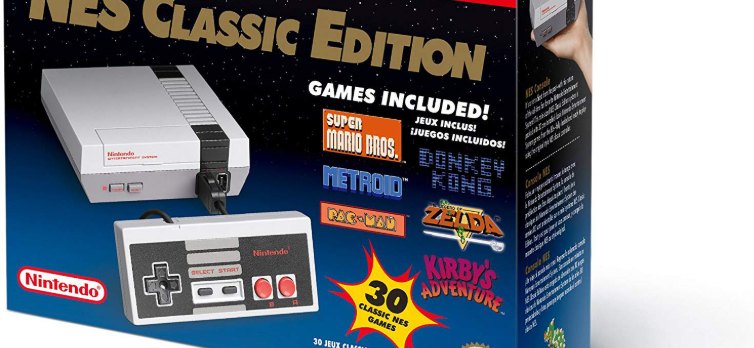
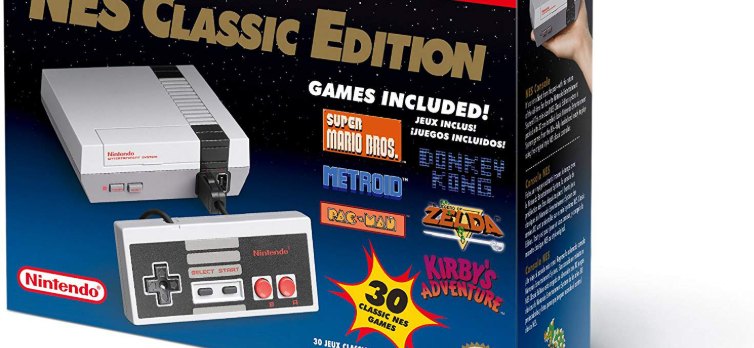
NES
After the crash of 1983, platform makers agreed that too much freedom for third parties is very bad, because the market turned out to be flooded with junk games, mediocre games and outright trash, which in some cases broke even the consoles themselves.
Nintendo's answer was the 10NES hardware lockout chip, which later gave the company not only control over cartridge manufacturing and the famous "Seal of Quality", but effectively control over the entire industry.
That is how the licensing model was born — the business idea that "the platform holder decides what ships", "when it ships" and "how much it costs", which lives on to this day under the respectable word "certification". The cage turned out to be so comfortable and so well fed that we still live in it, signing an NDA before the idea for the game even arrives.
Besides the organisational decisions and the birth of the digital Gestapo, the console brought with it the D-pad (invented by Gunpei Yokoi), which became the language of directional input for decades to come, defining not only input methods but also the genres of games built for that kind of input.
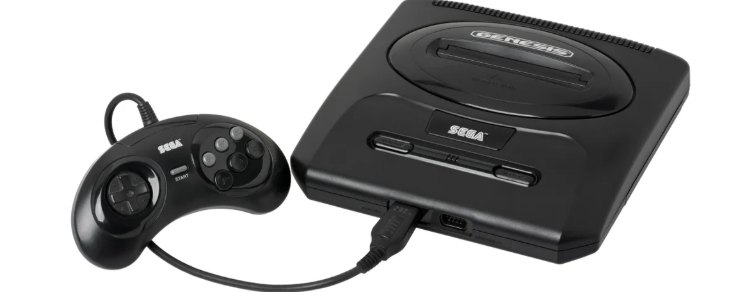
Sega Mega Drive
The Mega Drive / Genesis took the ColecoVision lesson on board and gave the developer a familiar "grown-up" processor, the Motorola 68000 — the very same one used in arcade cabinets — and if until then arcade ports had been rather rare occurrences, now it became possible to move games from the big arcades to home consoles, and that was a very tasty slice of the market for everybody.
It was on the arcade cabinets that the idea of annual sports franchises was born, the ones EA Sports made, while EA itself, well acquainted with the new chip through "clean room" reverse engineering, extracted soft licensing terms out of Sega, opening Pandora's box and handing third-party publishers a lever against the platform holder. But the little gift came with a catch and turned into the birth of mega-publishers, who began dictating terms to the platforms, while the rank-and-file studio walked under the standard contract then and walks under it now. Later EA and Sega simply divided the market between the two of them, and later still gave a start to smaller third-party publishers.
Here too came the second run at games over cable TV (Sega Channel), a far more ambitious brother of the Intellivision's PlayCable, with the ability to download arbitrary ROMs.
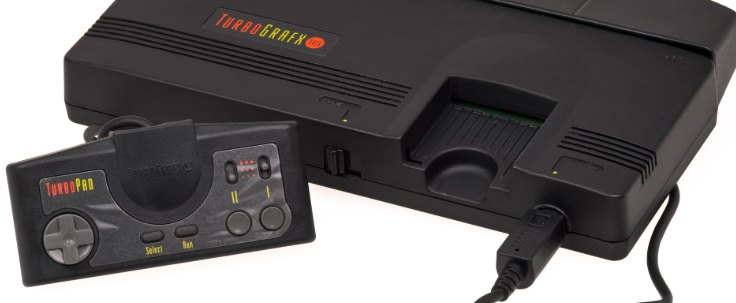
TurboGrafx
In Japan, the console with its CD-ROM² drive was the first in the world to open the door to optical media in a home console. This was not simply "a bigger cartridge" — it was effectively the exit of the economics of game distribution, of the "toys" in short trousers, onto the field of full-blown home electronics of the record-player and television sort.
For the developer this brought the ability to record full CD soundtracks and large assets without a constant eye on data packing, and also to store several variants of assets on the disc simply because the capacity allowed it. Without this console neither volumes above 2 MB, nor the sound of the nineties, nor the print runs of the future PlayStation would have been thinkable. But again, first does not mean successful, and in this case it does not mean surviving either.
For the joy of owning a drive you had to pay twice, literally. The first time with your wallet, since the drive did not arrive in the box with the console but was bought separately, so a game on a disc addressed not the whole already-niche audience but a thin slice of it — those who had shelled out for the add-on. The second time it was the developer who paid, because to be able to release a game on disc you had to sign a separate licensing agreement, for a couple of shekels of course.
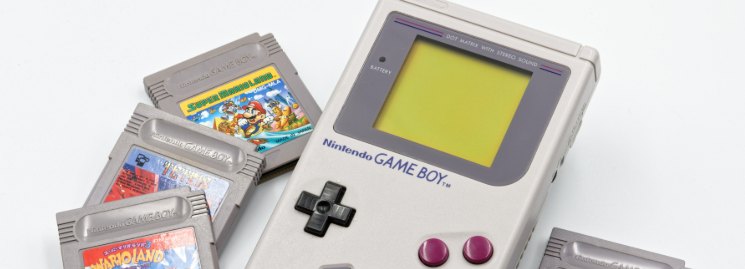
Game Boy
Technically the Game Boy was a modest little thing even against everything else in 1989. A monochrome screen without a backlight, showing greenish mush in dynamic scenes — but it had the ability to swap and trade (!!!) Pokémon between two devices, which turned the link between two devices into a gameplay and monetisation mechanic and gave the world the "collect and trade" design, out of which the skins and achievements we know would grow a little later and feed whole franchises to this day.
The second gift was more emotional and ideological, if you like. The feeble Game Boy routed technically superior competitors and showed that battery life, price and reliability matter more than megahertz and megabytes of RAM, giving life to handheld consoles as a direction of their own.
But "collect and trade" as the direct ancestor of skins, gacha and loot boxes led to the collection loop, and the thirst for money once again turned out to be the perfect instrument of monetisation, spawning that very gacha.
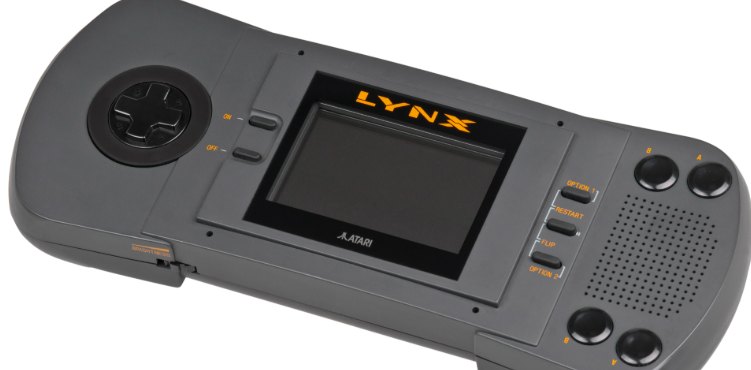
Atari Lynx
Against that background, the Lynx that came out in 1989 was a console from the future, carrying a colour high-speed backlit screen, hardware sprite scaling and rotation, a screen you could flip round for left-handers, and networking for a whole pile of devices — yet this notionally powerful console lost commercially to the grey brick that was the Game Boy.
It lost on price and on battery life, so the Lynx's legacy is rather conceptual: you cannot ignore the hardware entirely, but the main thing, as always, is in the player's wallet.
Hardware from the future came with a bill, though, and it was paid not so much by the player as by the developer. Hardware scaling and sprite rotation devoured the already meagre bandwidth and the artist's time, and a talent willing to fiddle with a chipset that exists nowhere else had to be hunted for.
Talents were few, so the game library was small too, making games was expensive and for nobody in particular, publishers saw this and were in no hurry, developers saw the publishers and were in no hurry either, and the loop tightened around itself.
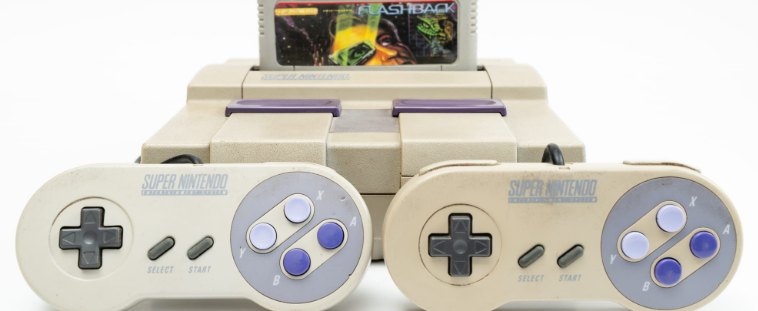
SNES
The SNES of 1990 gave the world three things at once, each of which outlived its own generation and became a new industry standard.
Sampled PCM sound through Sony's SPC700 chip freed players from abstract beeps and squeaks, putting real instruments recorded as samples in the world's best studios into games. It also gave the industry the professions of sound programmer and sound designer, because from that moment on sound in a team took on its present-day shape rather than being just a table of frequencies.
Mode 7, or hardware rotation and scaling of the background layer, which by itself spawned whole genres such as pseudo-3D tracks or karting (Mario Kart).
And finally coprocessors — at that time they lived in the cartridge. Now games could differ visually, that is, you could ship additional horsepower along with the game, exceeding the console's base hardware. The idea of "the accelerator rides in the box with the game" pushed 3D into the mainstream and grew studios that later moved into full-blown 3D.
But the beautiful idea of bringing your own new hardware with you works only up to the moment when Auntie Nina keeps producing hardware with that feature. In the end the idea turned out to be a dead end, snuffed out by the cheap CD and standard hardware, while Mode 7 quickly degenerated into a trick of the handful of studios that knew how to work with it.
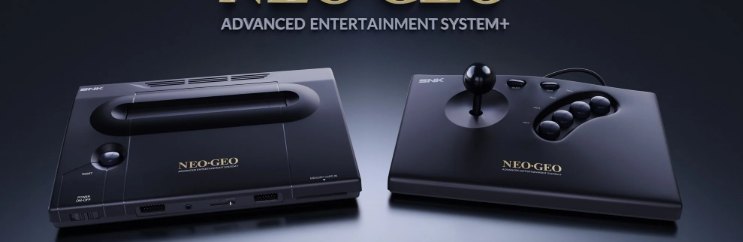
Neo Geo
The Neo Geo AES (1990) was uncompromising luxury for every player of the early nineties, because at home you effectively had the very same hardware that stood in the arcade cabinet, and the cartridges were arcade ones, and the price... was arcade too, and indecently luxurious.
For the developer it brought the ability to work with a memory card and moved the save off a chip soldered to the board and onto a removable medium you could carry home from the club and back, showing the whole industry the possibility of a portable save as a separate physical object.
The cartridges were genuinely arcade too, that is, monstrous in capacity and in price, and that turned the economics of development upside down, because a Neo Geo game by definition could not be small and cheap. The entry threshold cut off everybody except SNK and a handful of fighting and beat-'em-up studios under its wing, hence the library — graphically luxurious but genre-poor. A platform sharpened for arcades gave birth to arcade games, and the only "home" thing about it was the wall socket.
A few years later PlayStation would pick up this memory card idea and make it an industry standard, and we would come to see "my save as a thing I can take with me" as something self-evident. Not self-evident at all: for that, a separate thank you to the expensive SNK toy.
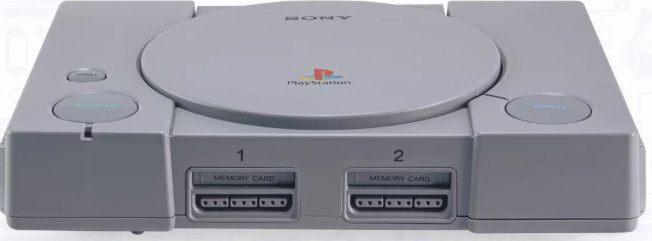
Sony PlayStation
If the Neo Geo gave us the memory card, then the PlayStation of 1994 gave almost everything else that is now considered a devkit, and above all the accessibility of development. There was the CD as a medium cheap to manufacture, and the GTE geometry coprocessor that enabled early 3D, and a sane rasteriser that made that same 3D predictable. And the devkits themselves, C and Psy-Q, gave the feeling that a console could be programmed without being a super-programmer. But ordinary programmers write ordinary code, often with bugs, which is why the signature look of PS1 games with their swimming affine textures and jittering geometry is literally the price of cheap 3D, paid for by an entire generation of players until studios learned to cook it properly.
On top of that came the removable memory card and later the DualShock, which became the template for the modern gamepad with two analogue sticks and rumble.
But the accessibility of development is both a gift and a fluffy rope with fragrant soap thrown in. If "anybody can program", then anybody can also produce dreck, and the shelves once again filled up with anything but masterpieces.
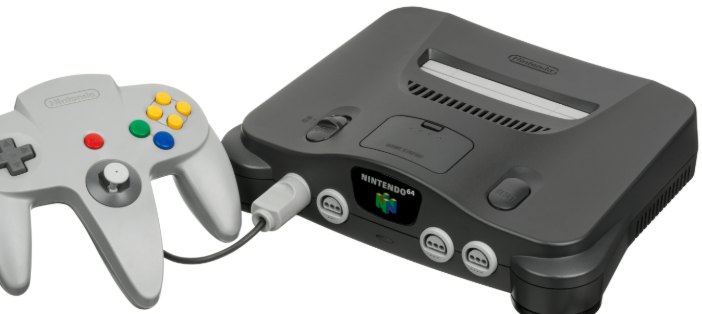
Nintendo 64
While Sony was handing out cheap SDKs, Nintendo's N64 was creating the rules of 3D game design, without which games today would be completely different. The analogue stick in the pad made smooth movement in three dimensions the norm, and force feedback a mandatory feedback channel.
The camera and Z-targeting from Super Mario 64 and Ocarina of Time fixed the canons of 3D games on consoles, and most modern console games use the "Mario test" to check how comfortably the player will orient themselves in the world.
But Nintendo's pride was always the cartridge, and it had a tiny capacity that killed both the sound and the video cutscenes, forced brutal asset compression and shoved Square and Final Fantasy VII straight into Sony's embrace. Add to that a texture cache of a pitiful 4 KB, which meant that the console that set the canons of 3D also went down in history as the console of soapy textures.
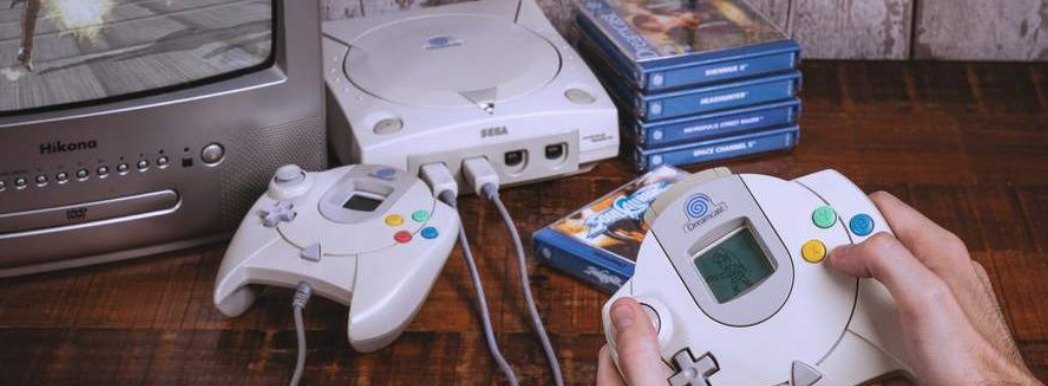
Dreamcast
Sega rolled out the Dreamcast in 1998 with a full-blown modem straight out of the box, so that online went from exotica for the chosen few to an everyday thing, and Soccer, Phantasy Star Online and ChuChu Rocket showed that multiplayer could be sold as a game in its own right.
The second gift was smaller but took root well too. The VMU format — memory with its own little screen and processor, into which you moved not merely a save slot but a mini-game inside the game, with its own hidden mechanic or a separate Tamagotchi living on the memory card. The idea that "the storage device can do something on its own" would later surface in the most unexpected places, from trophy icons to the separate companion apps of modern consoles.
But Sega itself paid for the modem in every box, and the online infrastructure of 1998 came with no off-the-shelf solutions and with an audience that did not understand at all why a console needed a telephone socket. Dialling up over an ordinary phone line was slow, noisy, and punished the mother who was trying to make a landline call at that very moment.
And although both ideas survived and became the industry norm, the console itself and Sega itself as a hardware maker rested in peace: the gifts brought outlived the giver in a far more literal sense than usual.
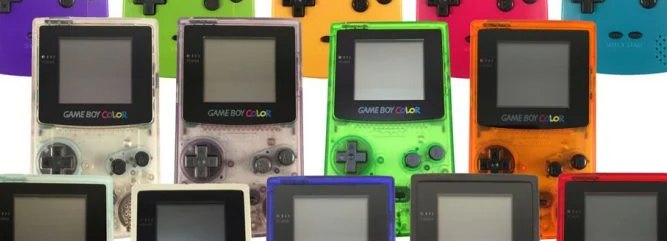
Game Boy Color
At first glance "a Game Boy, but in colour and with backward compatibility" was just about the "colour", but it had, in the Pokémon Gold/Silver cartridges, a built-in real-time clock, and that gave developers a new design axis in games, making real time one more gameplay mechanic and spawning such things as the day-night cycle, calendar events and growing berries — for all of which we have to thank the little yellow handheld.
A real-time clock in the cartridge is a mortal gift in the literal sense, because the battery runs down and the save goes with it, and the whole "living world" too, so after a couple of years — if you are lucky — the collector inherits a cold corpse.
But worse than the timer is that this great-grandfather of today's FOMO mechanics, "log in today or you will miss the event", was let off the leash in the name of good intentions, to give players a new real-world experience. And now every other live-service game tugs at me a couple of times an hour so that I collect those damned coins, making me watch an ad along the way and dangling loot boxes under my nose.
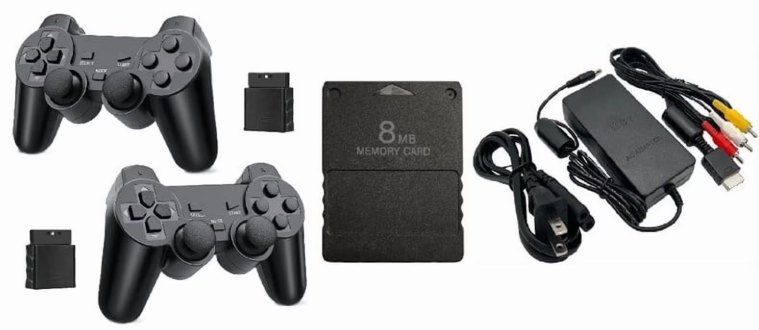
PlayStation 2
The PS2 went down in history as not the friendliest hardware, and the tales about a twenty-centimetre stack of manuals and a month before your first triangle... those are not tales, we have PS2 devkits and their documentation at the studio... those are not tales.
But to the developer and the industry the console gave the DVD as a game medium, with a capacity so large that most games could not fill it for nearly five years, and along with it one of the cheapest DVD players in a living room of the year 2000, which made it the best-selling console in history.
That sales performance opened up a new economy of scale that studios had never thought about. The gigantic installed base made the PS2 the primary development target, where budgets, talent and the game-on-the-PlayStation-first logic of development all went.
The economy of scale is a separate matter, because studios no longer choose what kind of games they want to make — whatever the publisher wants on its platform is what they will want to make. Now you get both a minimum project bar and the budget needed to climb over that bar, and on top of that the obligation to recoup development against that huge installed base — but now the game is obliged to target that entire base.
So scale began to strangle mid-tier projects, not by banning them... no, simply with money. And the studios that used to make risky, strange and niche things and moved the industry forward... quietly died off and shut down, because the option of making something safe and selling it to everybody pays off thanks to the installed base, while "Pete and Vasily Ivanovich rescue Matroskin the cat" does not.
Ballooning budgets, the race towards "even more expensive, even safer", the fear of shipping something that is not for everyone — all of that grew from here, from the discovery that against a large enough installed base it is more profitable to make fewer games but bigger ones. AAA as a class and AAA as a curse were born at this point in time.
The second gift was cementing the idea of backward compatibility as one more incentive to sell the console to players: from now on any new console was obliged to handle the old one's library.
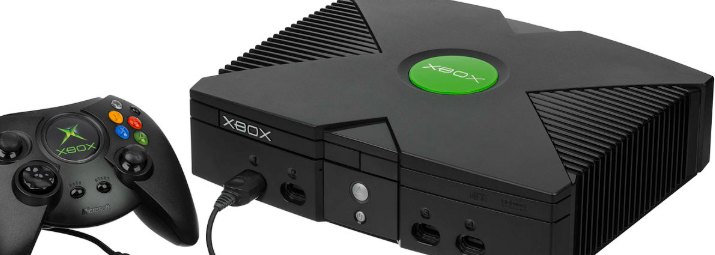
Xbox
The original Xbox of 2001 was almost "a PC in a console case", with a Pentium III and a GeForce 3 on board and the most ordinary WD hard drive you could buy in a shop, and that produced the infrastructural shift on which the whole modern console industry stands.
Now the HDD became part of the console, opening the road to game pre-installation and data caching, which in turn made patches, DLC and digital downloads possible. Originally the drive was put in because developers wanted huge worlds and online... but online itself soon became a feature in its own right, spawning the unified player profile, the friends list, matchmaking, voice chat and such a notion as greed... oops... the digital store, I misspoke of course.
All networked console gaming today is built to that pattern — again the words networked gambling are on the tip of my tongue, but I will not say them out loud. So it turns out that the Dreamcast ploughed, the PS2 sowed and the Xbox brought in the harvest, and quite soon afterwards Nintendo would fence that field off with a three-metre wall of... restrictions, that is, FriendCodes, a subscription and region-locked games.
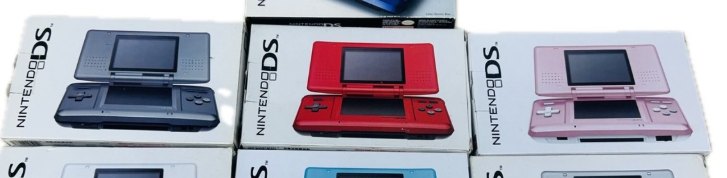
Nintendo DS
The DS of 2004 took the idea of the touchscreen as a game mechanic, and it turned out that a game could be controlled in any way at all, which flung the doors open to casual mobile design and anticipated the UX of smartphone gaming before smartphones became gaming devices at all.
The second gift was the Download Play scheme, where from a single cartridge the game was handed out over the air to the whole group, with the guests needing neither their own copy nor any installation at all, while a temporary install lived in the memory of somebody else's console until it was switched off. The very idea of "one copy for everyone within the network" had already been tried out on the PC with spawn copies of Half-Life and Counter-Strike (the mode for gaming clubs), but there you still needed a network, a server and an installation. The DS threw that out too, dropping the barrier to co-op play down to "switch it on and play", and it quickly became an expected norm.
But the touchscreen as a mechanic inevitably turned into the touchscreen as an obligation, and a whole wave of games bolted on the stylus and "blow into the microphone" just for the sake of it, simply because the platform demanded that the feature be used. The door to casual design worked both ways, and along with a new audience it legitimised a flood of games, while Download Play brought us to renting games and the ability to carve gameplay mechanics out into DLC.
Take a look at your Steam agreement — are you quite sure you still own the games you bought? Quite so... and the idea, it turns out, is as old as the DS.
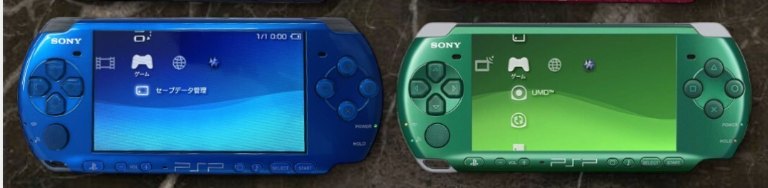
PSP
The PSP of that same year brought the developer the practice of scaling a single engine and asset set across different consoles, letting full-blown 3D engines run on pocket devices, and "the handheld version" stopped meaning "a different game from scratch".
The second gift was local co-op mode, around which the Monster Hunter phenomenon grew in Japan along with "the four of us got together and we are sitting here hunting", plus the early idea of Remote Play with the PS3 in the form of streaming the picture from the big console to a small screen, which opened the road to cloud gaming and cross-play.
The price of the gifts was a proprietary format (UMD) — slow, power-hungry and expensive to press. Dead on arrival, because a film on a disc for one particular console was needed by nobody, while everybody who wanted to make a game for that platform had to support it.
Xbox 360
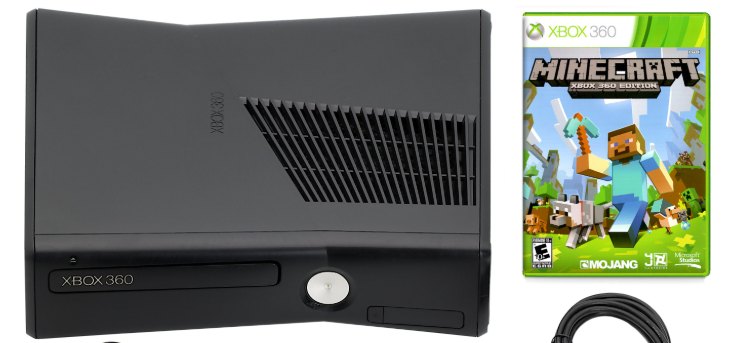
The chubby one added achievements and the notion of "Gamerscore" to games, which quickly became the system-wide standard of meta-progression and got copied by every platform I know of, from Sony's Trophies to Steam achievements. And suddenly the developer had a new instrument for retaining players and a new language for talking to the audience, one transparently built into games rather than nailed on from the side.
The second gift was aimed at nobody in particular: Xbox Live Arcade was added to drag in more indie developers, but it turned out to normalise digital distribution of full games too, not just demos and small titles, and it introduced the notion of mandatory certification of online functions as an ordinary part of a game's pipeline. And now no game can be considered a solo one if it ships in a box: there will definitely be something online in it, because you simply will not pass certification without online functions.
And finally the 360 gamepad became the default controller for the PC, and now if a game says "gamepad support", by default it means the Xbox layout.
The moment Gamerscore started bringing in users — and something green with presidents on it — it began to influence games, and design started bending towards retention, reaching the absurdity of "kill 1000 enemies" for the sake of a tick, opening the road to endless grinding for a virtual number in a profile. That is how design led not by designers and writers but by metrics and spreadsheets was born. And mandatory online certification opened the road to hell: now every other player in the market started demanding that any boxed game bolt on at least something networked, killing the pure single-player mode and putting the industry on the white... oops... on the treadmill of online.
PlayStation 3
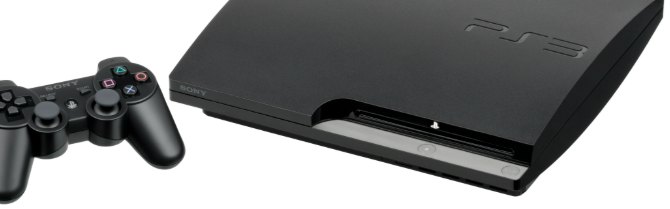
The PS3 is famous for its problematic Cell processor and for the joke that "a Rubik's cube stays a cube's Rubik for the first hundred times". This console's main gift was free online, which against the competition looked illogical: Microsoft took its shekel for network play as a subscription (Xbox Live Gold) while Sony opened multiplayer for nothing. But it turned out that free entry brings the platform far more money than charging for access itself, because after that you can knock coins out of humans practically forever.
But "free online that brings in more than paid online" has its underside too, and it defined what games in general turned into. The moment it became clear that giving access away yields the platform more than selling access, the economics shifted from "sell the game once" to "sell one game several times". Free entry was not a gift to the player but a change of the industry's business models from Games to Retention: if the money is now in how long you sit there and how much you buy inside, then design starts serving not enjoyment but time-in-session.
Battle passes, seasons, "log in today, buy tomorrow", in-game shops, game money for real money and the whole live-service menagerie grow out of that discovery of the PS3 era. Online is now valuable not as a feature but as a pipe through which the player can be asked for a little money again and again. The player has now finally stopped being a buyer and become a source of flow.
The second gift looks paradoxical, because the agonising business of programming the SPUs taught the industry multithreading and compute thinking. Even Tim Sweeney estimated full utilisation of the Cell at roughly five times the effort relative to a single core, and development on the PS3 as the most labour-intensive of all previous platforms.
It hurt, but a whole generation of game enginEErs learned to think in parallel, to think about data and not only about code... I caught only the very edge of that era, when most of the crutches and rakes had already been gathered up and lovingly wrapped in rags, but I did get to fix a couple of bugs on the triple. In any case the echo of the third PlayStation can be heard today in any GPGPU development, as the necessity of being able to think beyond a single thread.
Nintendo Wii
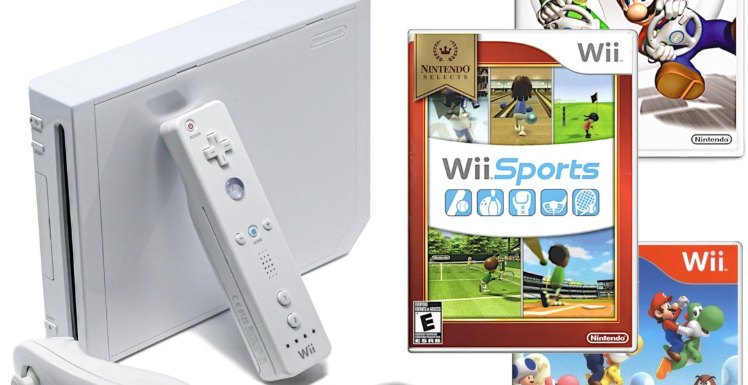
Nintendo of the 2006 vintage no longer looked like a top-tier player, but it kept its status as market leader, a huge devoted audience, and could afford experiments. Which is why the Wii came out — it did not chase graphics and power, but invited those who had never played to play, offering control in the spirit of a television remote. Japan does remain the homeland of true game development, of real machines and of samurai.
Motion input burst into mainstream development and forced everybody to study the mechanics of the accelerometer, the gyroscope and human movement kinematics, opening the road to Kinect, PS Move and later to VR games as a separate direction. The industry would later tire of waving its arms about, which would remain for fitness in the living room, but the door to "games for people" had already been opened, and nobody would be able to slam it shut.
But control in the spirit of a television remote flung open the door not only to a new audience but to new hackwork as well, and as soon as the platform made waving its headline feature, a wave of games arrived where a swing was bolted on everywhere. A gesture as input is imprecise and unrepeatable by its very nature, and the designer, instead of working around that, was forced to put it on display. From here too came the famous flood of shovelware, when a low barrier to entry for a new audience turned into a low barrier for quality, and the Wii assembled a library where a handful of brilliant finds drowned in a sea of mini-games that were deleted five minutes after launch.
By inviting those who had never played, the Wii simultaneously showed the industry that this audience can be palmed off with less game for the same money, giving birth to the casual game genre. The door to "games for people" really was opened and could not be slammed shut, because it poured into mobile free-to-play, taking the logic of "minimum game, maximum reach" to its limit. The Wii proved that the casual market is enormous, but the people who made use of that proof were not at all the ones who opened that "games for people" door.
These days...
By the latest console generation the industry had collectively grown tired of suffering heroically, including suffering pointlessly, and both consoles got x86-64 and a unified address space for CPU and GPU, which developers had been asking for since PS1 times — just a moment, please.
That very convergence of consoles and PCs made shared engines and easy cross-platform work possible, and ended the era of "rewrite the memory management system from scratch for every box".
But the hidden rocks, as usual, did not get any fewer: the unified bus spawned competition between CPU and GPU for memory, and the laptop-grade Jaguar with its small caches punished you for sloppy data layout, dictating development in the SoA style instead of AoS — but those are already familiar PC-like problems. The only noticeable gift against this background, as I see it, is Game Pass, the idea of "Netflix for games", which reshaped monetisation and the content that lands in it... and not always for the better, setting the direction of console games towards services. And the other big platforms are already looking not at the processor's next teraflop or the disc's next terabyte, but at how they too might acquire a pipe like that, one that brings in shekels every month rather than only when a disc is bought...
So if in 1976 the gift was the cartridge, which separated the game from the hardware, then half a century later the gift became the subscription, which separated the player's money from the game itself once and for all — which is, perhaps, the most honest summary of where all these fifty years of generous gifts have brought us.
About mobile gambling... ugh, it keeps sticking... gaming, maybe another time.
← All articles