
Recently I was at an industry conference where I ran into a couple of acquaintances I'd started out with back in the St. Petersburg studios. Unlike me, who always worked "for the man," at some point they chose the thorny path of making indies and their own studios, and (judging by how they were ordering drinks) that path turned out significantly thornier than it looked ten years ago. Although their eyes burned exactly the same as back then. Then and now, those burning eyes evoked both envy and a faint suspicion that they simply hadn't had time to get truly tired yet.
Then we got talking. Let's call him Kostya — the one I once made "Sims" clones with — he's been cranking out a gacha for some Chinese folks for a year now to pay his guys' salaries. And let's call him Lyosha — he runs a four-person studio and does code review of AI commits, but now for Indian guys, only the ones in sunny California rather than in beautiful Delhi. Here I recall my quarter-century of legacy, and when people tell me that AI will soon replace programmers, I quietly rejoice: after so many years of development, most systems there are built so crookedly that any neural network burns through all its tokens just trying to figure out where it's landed. Which means at least until the game's support ends, I'll have tasks.
Indie studios don't much like to talk out loud about cranking out gachas and working for the Chinese, because it breaks the stereotype of the "free and independent," especially at industry events where everyone walks around with identical badges and identically confident faces. Getting into indie is relatively easy; but surviving in it longer than the development cycle of one average project turns out to be a task with an asterisk.
About the gray wallpaper
Historically, a division of labor has developed in game development: into those who make what they want; those who make what they're paid for; and those who pretend the one is somehow connected to the other. The prospects for migration, once you're already stuck in one of the categories, look so-so, and those who work at the Larians and Remedys of this world rarely wonder why a person with two specialized degrees has spent a third year in a row laying out coin-pickup animations.
Most of the passion projects, the ones we ever first opened Unity or Unreal for or started writing our own engine for, live on pure enthusiasm, a thin layer of publisher money, and prayer — and the prayer usually works a bit better than the rest. There are either no salaries, or they're paid in options that have a chance of turning into real money roughly with the same probability that Bethesda will finally fix its engine.
Service projects with microtransactions and a constant online presence live the opposite way, in a mode of continuous rain of cash, but I look that way with growing melancholy, because after the announcement of yet another seasonal pass for five thousand rubles in yet another grindy open-world game, I begin to seriously doubt whether we're even making games anymore, rather than casinos with pleasant graphics.
Big single-player projects are somewhere in the middle. Sometimes they turn out genuinely decent, sometimes you get a product, or yet another remake of a remake of a re-release. In the year twenty twenty-six I no longer even understand what to be surprised at, when the industry solemnly announces a remaster of a 2021 game whose main innovation was a remaster of a 2014 game.
A recent trailer for yet another open world with a silent bearded protagonist who collects crafting resources and climbs a tower to reveal a chunk of the map reminded me that this formula is now in its sixteenth year of the same game-design Groundhog Day, only the textures keep getting higher resolution.
I'll note that I look at the industry from my own chair, and that chair stands in a big company. In the niche of independent developers on the Steam Deck and Game Pass the picture is surely better, and people there have gotten new platforms and new air. But I'm talking about what I see myself.
About the choice
Most people who came into the craft on a wave of love for some System Shocks, Baldur's Gates, and Silent Hills discover a couple of years later, to their surprise, that love for these games doesn't very willingly convert into a salary, while investors who generously pour money into yet another clone of a Brave Old Man get scared at the words "immersive sim," start hiding their checkbook, and try to slip off to a more lucrative place.
In the end, studios with genuinely interesting ideas hold on exactly as long as their founders have patience, credit money, apartments, and the strength of their relationship with their spouse. As soon as one of these resources runs out, we get another social-media post with a photo of an empty office and a heartfelt letter of gratitude to the team.
I look at such posts, then I look at the publication date and mentally estimate which of my acquaintances is updating their resume right now and who could be dragged in for a bugfix into my cozy legacy swamp — which speaks either to my powers of observation, or to the scale of the problem, or to the fact that I have too many acquaintances from shut-down studios.
After yet another beloved studio closes, its former employees discover that there are, in fact, quite a few job offers on the market. It's just that all these offers somehow lead to a few companies that make identical games with different icons. And they pay quite decently there, by the way, which noticeably complicates the inner moral choice.
The especially fine irony is that the classic mobile segment, after almost twenty years of going bananas, now survives with mixed success, and all these big players have quietly begun to diversify into adjacent genres of varying degrees of "social responsibility," and now practically every major publisher has, somewhere on the third level of subsidiaries, a studio politely called the "adult division" or simply a "subsidiary," and at the bar — well, somewhat less politely, starting with the letter "p"…
And so a few of my former colleagues from a conditionally respectable mobile line about building either a city or raising fish write that they're moving to a new project in the company's "subsidiary"… I can hardly judge them — a person simply needs to be able to pay for a rented apartment, the wife's nails, and a new laptop for their beloved self.
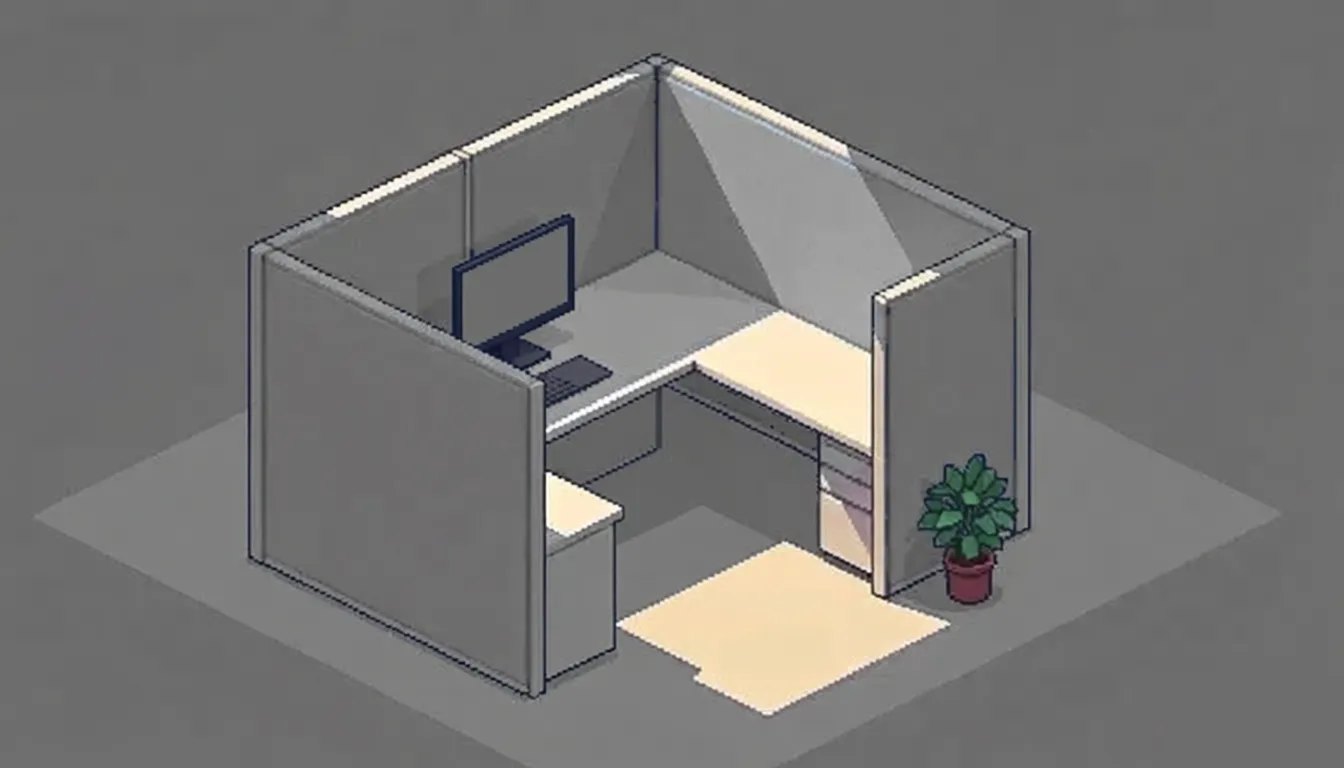
And so we all collectively end up in one big room with gray wallpaper, where someone makes a masterpiece while subsisting on instant noodles, someone churns out monetization mechanics and quietly hates their mornings, and someone manages to combine both occupations, as a rule not very successfully, and meanwhile we all sincerely pretend everything is fine.
About dreams
At those same conferences, after the second glass, the conversations inevitably turn toward "I'll finish this contract and then I'll sit down for my own project," and we all nod in agreement, because we ourselves have on our drives that very file with a description of the dream game, which hasn't been opened since '18, but whose modification date is somehow always fresh, because we regularly crawl in there to add one more line and close it without having written anything.
After the third glass of wine and a shot of something, Lyosha finally says out loud the thing he seemingly came to this conference for: that for six years now he's caught himself in the heavy feeling that he professionally optimizes the sale of skins in a project he himself wouldn't install even under threat of losing all his limbs.
And at home, on weekends, at night, he tinkers with his little project about exploring abandoned metro stations, in which there are no lootboxes, no daily bonuses, no battle pass, no co-op mode with teammates from Brazil — but, unfortunately, there's also no investor who could carry a year of full-time development.
This was probably one of the more sobering conversations of the last couple of years, because I heard that the man had stopped considering himself a game developer and now just writes code for a salary, because they paid less and less for burning eyes, so at some point the eyes stopped burning, and the salary remained. And to somehow finance his own passion project, he takes on contract work on the side for not-the-most-inspiring clients, and I won't even specify which ones exactly. And every time he promises himself that this gig will be the last, and every time, to his surprise, he signs the next one, because the passion project stubbornly refuses to become self-sustaining, and the great indie heroes from the documentaries all lied a little.
Kostya at that moment was finishing his third glass, and for a couple of minutes we all forgot that he has a gacha, his guys, and an office lease. Actually no — Kostya definitely didn't forget; at that very moment he was replying about a new feature.
About the team
Globally this, of course, is no different from the situation I myself ended up in a few years ago at a big studio with gray wallpaper, it's just that now I myself choose exactly what to poison my professional conscience with — which in theory ought to add dignity, but for some reason only adds wrinkles.
Over this time I've put together a team of a few sharp guys who at the interview honestly said they came mainly for a stable salary and the promise that we'd spend at least half the working time on something meaningful. And I sincerely understand them, because I'd have hired myself on exactly those terms.
This is probably the main thing I've understood over my career in the industry, and it sounds a little sad, but honest: the profession of a gamedev developer in the year twenty twenty-six is to a large degree the art of negotiating with yourself that these particular forty hours a week we'll endure for the sake of those particular ten in which we make something we won't be ashamed to show our kid.
And you know, at some point I stopped holding it against myself, because when I look around, I don't see a single person in our segment who has this balance perfectly arranged. This even applies to those very heroes from podcasts and interviews who talk about pure art and following the dream, but every other one of whose investors came from a fund with a not-so-ethical financial history.
We're all in the same boat, of varying degrees of leakiness, and the only meaningful difference between us is who, and with exactly what intonation, whines about it on Twitter or in posts on Habr — and I sincerely prefer the company of those who at least honestly admit that the boat is, in fact, leaky, and don't pretend that we're all sailing on a cruise liner to the islands named after Sid Meier.
If gamedev really were the romantic industry it's painted as on conference posters, we'd have long since stopped getting remasters of nine-year-old games passed off as the novelties of the year.
P.S. The boat and the poverty have been covered; that leaves the dogs. Most strays growl at each other over the same piece that was generously tossed between them to watch the squabble. The smartest ones eventually realize that the stairwell is warm and they sometimes feed you there.
← All articles