
Over the lifetime of the game-development industry, hundreds of different mechanic formulas capable of entertaining us have been invented. Some died after showing up in a couple of games, some faded over time, some still exist. And there are those that not only survived but became mainstream, even though they only fray players' nerves. The game design of most old games — from Fallout 2 to the first FarCry with its five active perks — even if it wasn't the pinnacle of art, hooked you no worse than today's sandboxes with a million activities. You rarely want to play a game a second time, and when I remember you can spend a hundred or more hours on a playthrough, I think — did I really need that? I could have done something more interesting instead. I know how the second Fallout ends, I've known it for the fourth time now, but every time the game surprises me with something new. The new "Avatar", on the other hand, I dropped halfway — too much of everything and all of it unfinished, and the transparent walls… just the bane of the game. And here's the question: is something missing from this bloated game pumped full of a hundred mechanics? Just think — Avatar has more than a hundred core mechanics that affect the environment. Maybe something got lost in games? Though "lost" sounds strange — over so many years the industry has only created a sea of new stuff. This article is oriented toward "grumbling", so don't expect any great secrets or fine points of mastery.
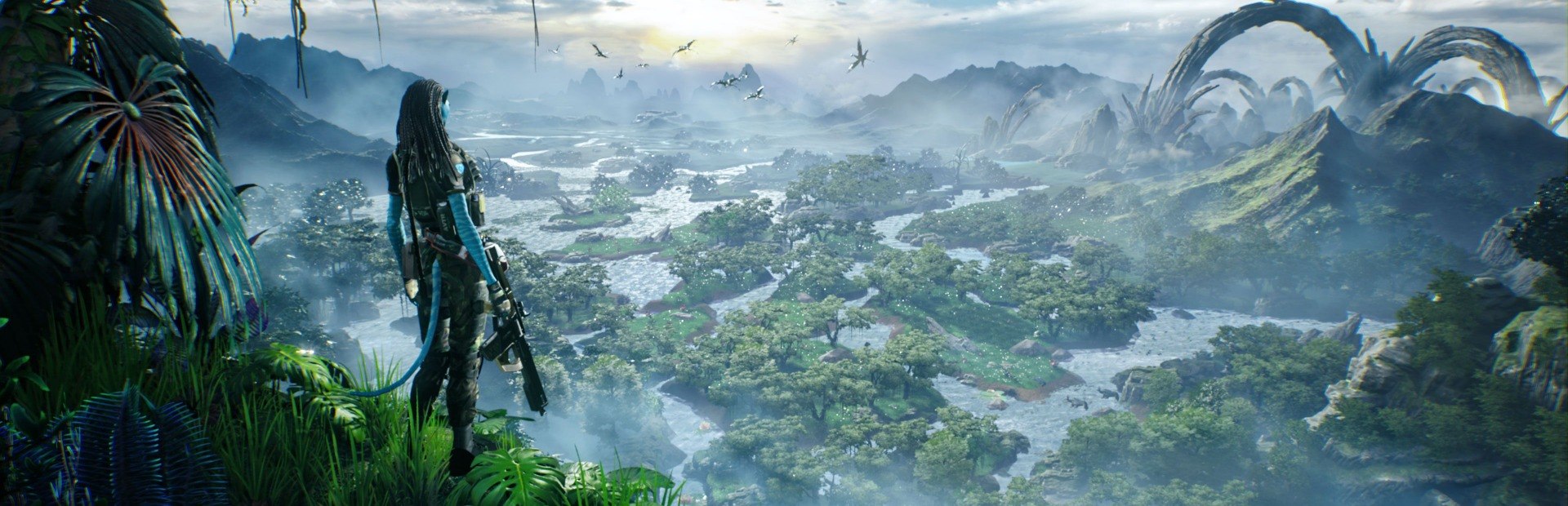
Pretty, and three quests in half the game :(
Clear goals
All the games (that I played) up to around the end of the 2010s had a goal. The likes of Fallout 2 (1998), Assassin's Creed (2007), S.T.A.L.K.E.R (200x) don't lead the player by the hand, showing a marker on the map of where to run. More than that, you yourself try to figure out where to go, how to complete quests by talking to residents, hacking terminals, reading notes and diaries. And it's interesting, it draws you into the game's lore better than any cutscenes. And the main goal still surfaces in conversations, whatever quest you have to do. Morrowind (2002): the protagonist is the reincarnation of the legendary hero Nerevar, the goal is to fulfill the prophecy and defeat the great villain — the vampire Dagoth, who plans to use some ancient weapon of mass destruction; this becomes known in the first couple of hours of the game. What else sets these games apart is that they let you create your own goals and pursue them, and that was the most interesting pastime. In 2009 Minecraft appears — it's probably the one that broke everyone :) by putting the non-story component of the game above all else. And other developers, whether they wanted to or not, dragged these ideas into their games — only it isn't always useful.
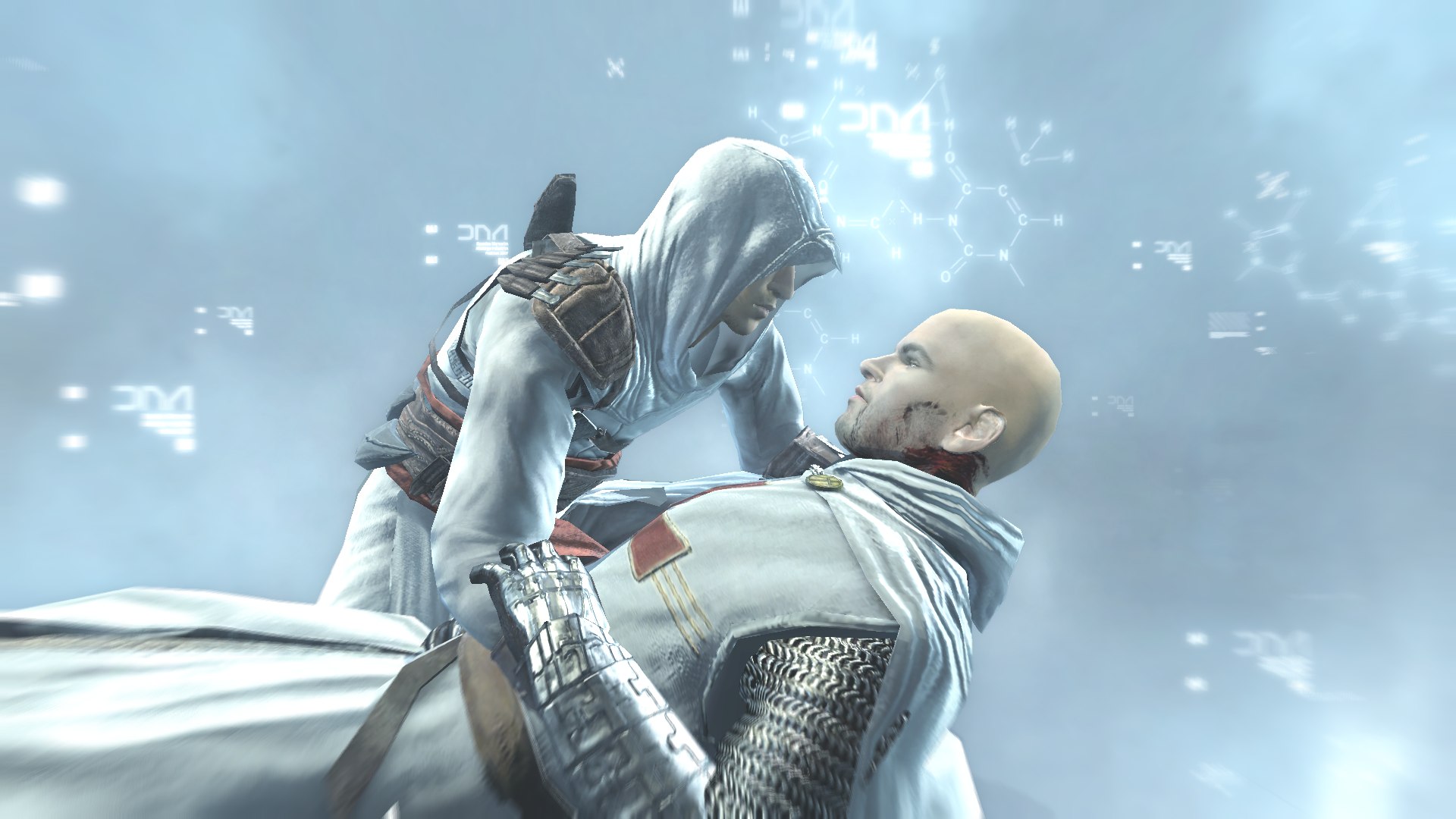
The first Assassin's Creed was wonderful: a great, atmospheric setting, a finished story. Almost complete freedom of action — you can climb anywhere and run across rooftops from one end of the city to the other. The second part didn't lag behind either and amazed with its historical views and locations; you could just wander the narrow Venetian streets, spending more than an hour of game time on it — that's how great they were. There was no desire to rush through the open world between missions.
Systemic design
"Systemic" is used here as a synonym for whole (a system), when a game is initially built top-down resting on a single concept and story — a vivid example being classic RPGs like BG/Planescape/Morrowind, with an initially whole world and a set of mechanics, a sprawling story and an ambiguous ending. The blurring or absence of goals in games led to it becoming possible to make games incompletely, to switch to so-called non-systemic design — that's when you create mechanics in isolation from one another and hope that closer to release it'll all grow together into a single whole.

What grew is what grew
Good systemic design conflicts with DLC, because you have to make a coherent game right away, and DLC is the most evil thing that could have happened to the industry. But don't confuse it with story and cosmetic DLC that came about when game features were cut because they didn't make the release. This is about planned cutting-off of parts to make a bit more money after launch, turning a full game into a game-as-a-service. The very essence of the problem — splitting a game into such parts breaks it: breaks the story, breaks the mechanics, breaks the activities. But it makes it possible to ship an "unfinished" version under the guise of a full game, making the flow of finances more controllable and predictable over time — which is exactly what management needs. On average, games with DLC earn twice as much money per copy. Do you know how many times Fallout 2 was under threat of cancellation? From official sources — 8. Or maybe you're curious how many add-ons came out for Fallout 76? 7 major and over a hundred minor ones. Non-systemic design lets you make a game in parts, but the game's integrity is lost and it has to be made simpler. Simple games, of any size, are easier to control — the studio dutifully reports on the levels made, everything goes according to plan, milestones are delivered and betas are played — but there's no "game", because there's only half a game there, and the second half is in DLC that will be released later, generating controllable cash flow.
Missions and the open world
This lost mechanic follows from the previous one: if there's no systemic design and a story laid on top of it, then you don't have to think about creating interesting missions. Somewhere after the early 2010s developers for some reason decided that creating well-staged, interesting, thought-out and complex missions is superfluous. And double bottoms and gray morality with different endings in quests (in quests, not in the game) were forgotten entirely. But in exchange we got the open world and clearing territories. You have a great story, a written conflict and excellent narrative? Let's dilute all of it with dozens of identical fetch-carry-kill tasks. Watch the story cutscene and off you go to clear the map. And so on, time after time, in every other project. When was the last time you had to jump across tiles bearing the name of a dead god, with the book holding the name in a library in the middle of nowhere, or help an angel investigate the disappearance of a sister with 8 different endings in a single quest? Even in the latest Hitman games — as well as that game lends itself to such sandboxes — you're given only 2-3 solution options per level and only with special items, although even in the first games it was possible to use everything in the inventory, from a garrote and poison to a fallen elevator. There's a concept in level design called behavior base — that's when a level is built so that any part of it can be reached by at least three routes; the originator of this kind of level design was Deus Ex — the levels themselves are closed and not particularly big, but they feel like huge sandboxes precisely for this reason. And even umpteen years after the first part's release, people are still finding new ways to complete quests there. I only learned last year that you can hire almost any companion to complete missions (via the console and cheats; the original game doesn't have this option). But the very possibility was built in. And with a couple of mods, you can play co-op over the network in the single-player campaign — two JC Dentons running around, each able to do their own quests, which is no surprise for the originally networked Unreal Engine.
Enemy levels
While getting rid of systemic design everywhere — in the sense of making a game as a single whole system rather than a multitude of small ones with attempts to make them get along before release — many developers ran into the fact that they had to remove the enemy-level system, because the resulting monster is practically impossible to balance. And then someone gets the idea: let's raise enemy levels along with the player's level. After the "practically ideal and polished" level system, for both player and enemies, in Morrowind, out comes TES4 with automatic growth of enemies' "damage" in parallel with the protagonist's development. Damn, to kill some lousy rat you had to dance around it for two minutes in top gear.
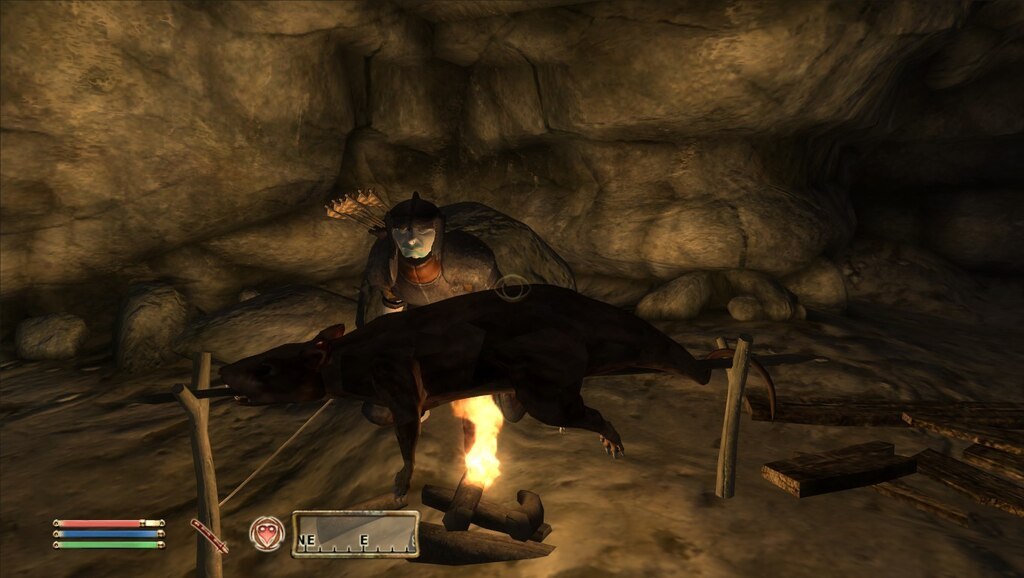
A solid level-70 rat
Okay, rats; another variant — you "decisively" play the role of a thief in the old Scrolls, dumping more XP into stealth than into sword and shield. You rob all the houses in town in one go, all invisible and merciless Robin Hoods, leveling up. And then you "suddenly" start a story combat quest, bearing in mind that the missions have already been "fixed", and you simply can't get through it via stealth. Our Khajiit makes a worse warrior than no warrior at all, and there are many enemies in the quest and they're of a nice high level, as if the virtuoso of lockpicks and nimble hands were a warrior. While you were leveling a thief, the warriors were leveling warriors — that's it, dead end. As a result, in the late stages of the game every scruffy Khajiit robber started flaunting daedric armor, carrying along an extra outfit for "non-combat operations" and "magic quests". Many just created a new hero, because the playthrough branches for non-combat builds were simply broken. Other developers, looking at the cosmic sales of the fourth Scrolls, started thinking that auto-leveling isn't such a bad thing. To understand the inferiority of this approach in story-driven games took more than 10 years and umpteen big projects with bad ratings — and even now auto-leveling remains in many games, if in a hybrid form, since it's much easier than balancing the game.
Learning through interaction
The desire to show every corner of the game, every mechanic, leads to the tutorial being overloaded. From contextual hints to a marker on the map, the instructions are extremely precise, broken into small steps so that even a three-year-old can understand them, and this happens in almost all games. Setting clear goals is of course important, but it shouldn't turn into a path from one waypoint to another. Old games had tutorials too, training missions, but they were built so that the player would figure out for themselves how to use a particular thing, system or mechanic. And that made the learning more valuable than simple hints or explicit missions that teach such skills. In the first Thief the player simply found a water arrow, and how to use it they grasped on the level: you can put out a torch, you can shoot the floor and move more quietly, you can shoot a jar of oil and then its spill area will be bigger and the guards won't notice you. Sadly, the ancients' technologies for creating this kind of learning were lost in the late 2010s.
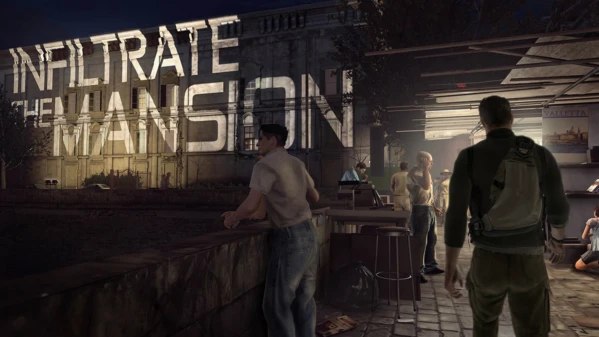
The designer was lazy with the tutorial
Why do they make pop-up hints or explicit missions? First, creating the tutorial is put off until the very last moment, or even to the final-tweaks stage a month before release. Sometimes this is caused by a changing concept, but the main reason is presentability — the tutorial almost always comes at the start of the game, and the feeling from sloppily made missions, even training ones, stays with you for the rest of the game. Allocating a whole designer, or even more than one, to tutorial missions becomes too expensive. That leaves using universal and simple learning tools like popups; they don't require context. Even though it's perceived as pulling the player out of the process, it doesn't cause negativity toward the rest of the game. These are words from an interview with Sheri Graner Ray; in short, proper in-game learning is slow, expensive and unfashionable.
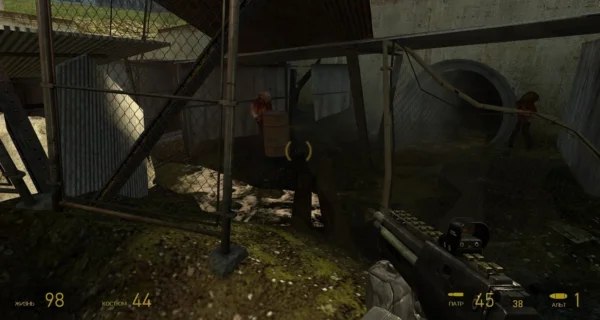
A good example of a tutorial is Half-Life 2 — I don't remember whether there were pop-up windows (most likely not), but I do remember well that the levels are built so that during the tutorial the enemies physically can't harm you, while still showing most of their abilities.
Reward and Punishment
Only rewards for progress are left: new items, experience, story elements, and so on. But such an important motivator as punishment is gone — it's not a designers' mistake; people get upset if they don't win. An upset player writes a bad review of the game, other people read it and don't buy the game. Punishment was removed because it leads to fewer sales. When was the last time you saw medkits in games, rather than just sitting in a corner? In the first two BGs, behavior with companions affected the chance of items dropping in chests; in TES3/4 an incorrectly built character closes quest branches and the ability to complete whole quests; Half-Life 2 makes you solve physics puzzles to progress through the story. The first Thief games fine the player for kills, water-arrow use and noisy thefts, and then merchants give less money for loot and snidely comment on the noisy thief's adventures. It's one of the few games that honestly uses ambient sound for NPCs. The characters around use the same detection system available to the player. Each surface has its own "noisiness" rating. The noisiest is metal — it'll quickly give you away to everyone nearby. Carpets noticeably muffle footsteps, so much that you can run and jump on one — and so can the guards, by the way. A stone floor sounds different if you were in water before. And the green surface of vegetation rustles if you walk on it. And sound isn't only footsteps, but the thud of a fallen soldier's body, jumps from some height, the clang of a thrown plate or mug, your actions and others'.
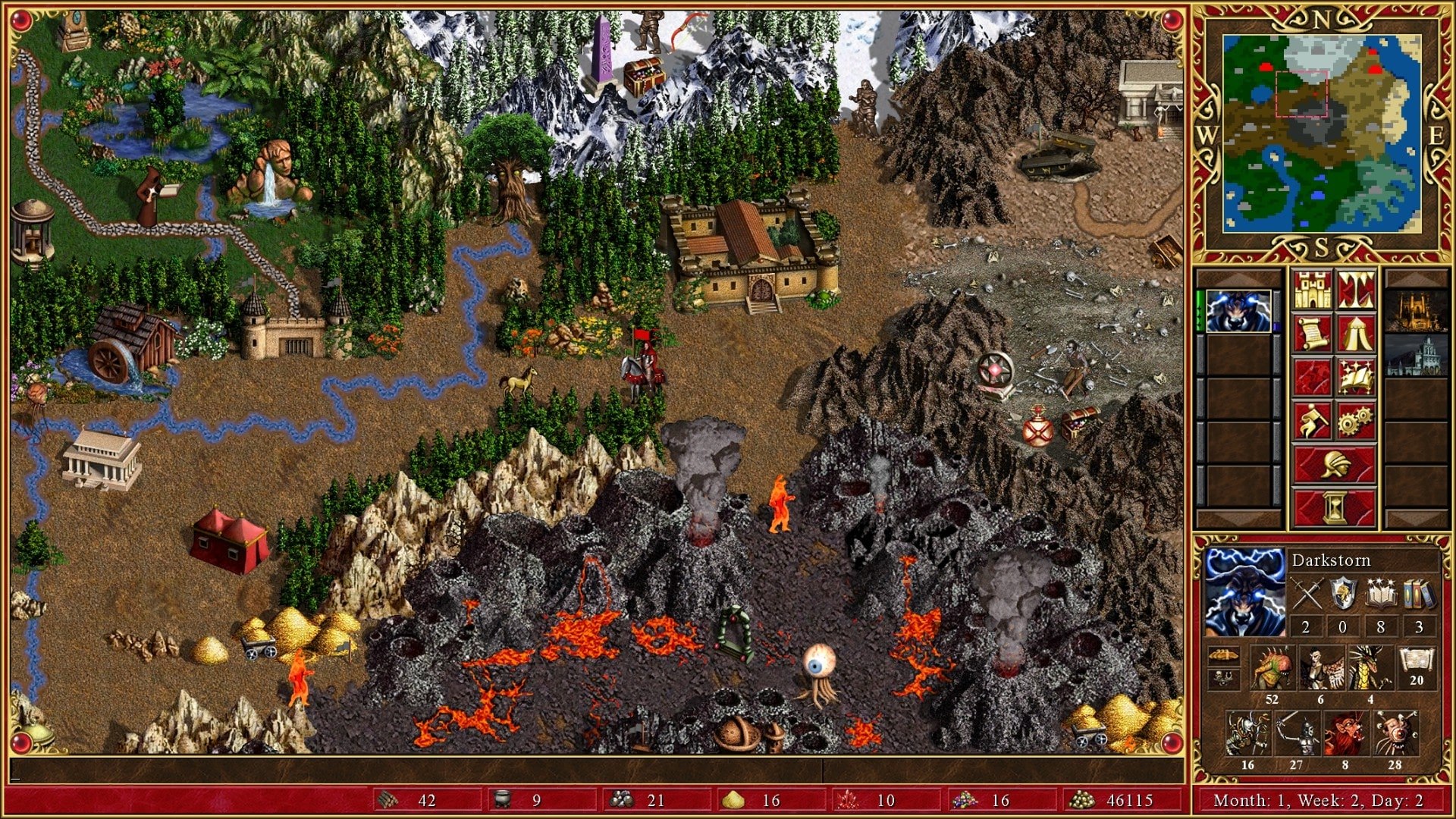
Modern games don't punish for such things, because it lowers sales: "Players money first" as they say. HoMM 3 — don't know the monsters' specifics? You'll most likely lose the map even on a medium AI level; behind the pretty picture hide calculations on a sheet of paper.
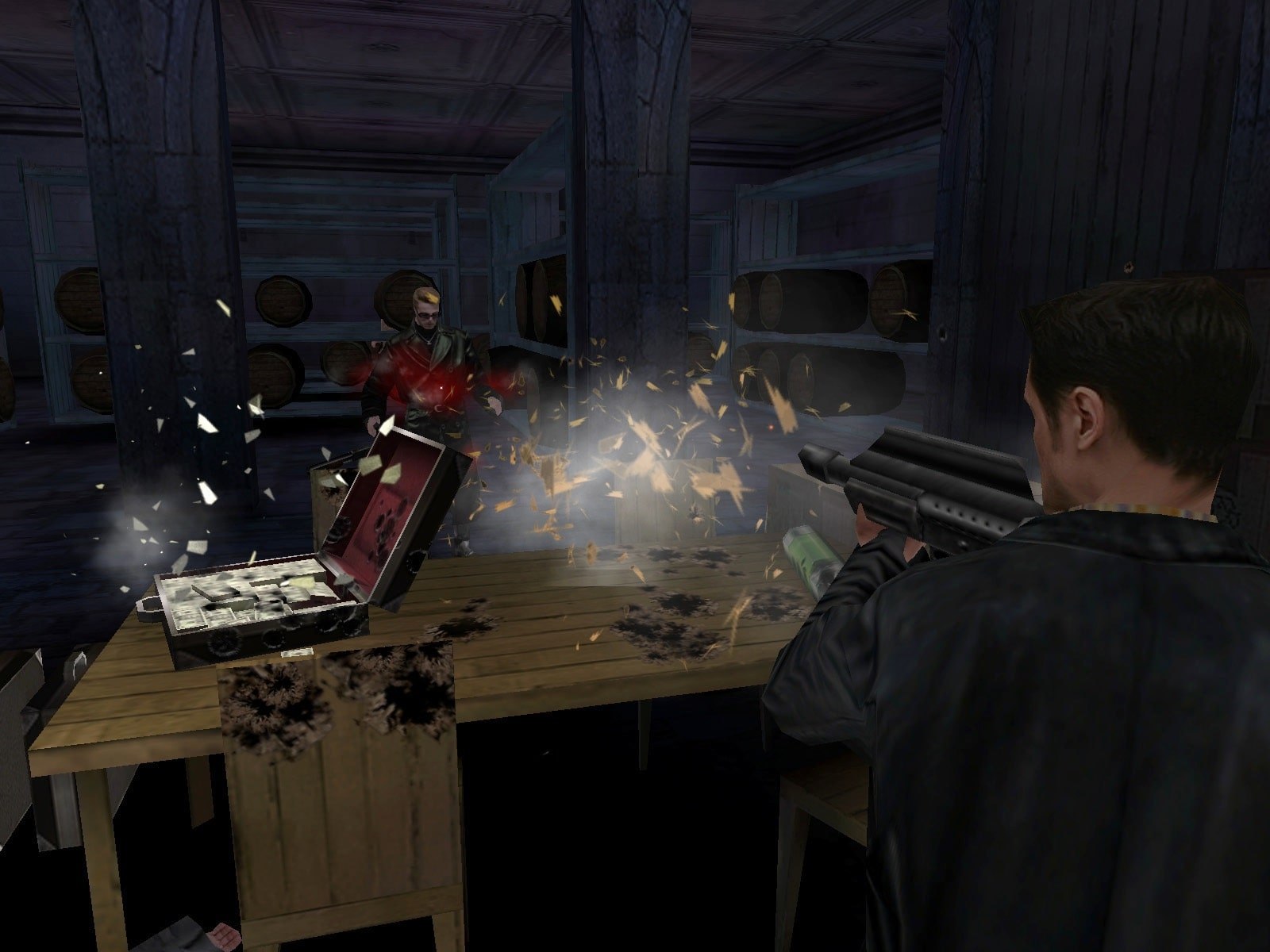
Don't respect the shooting mechanic in Max Payne? Welcome to a checkpoint. And so on until you learn to shoot. The game doesn't forgive misses even on the easiest level, and there's no aim assist on a gamepad.
The karma system
And this problem follows from the absence of punishment: if there's no punishment, then the punishment becomes a reduction of the reward. Most modern games have factions, relationships with characters; formally, karma has remained in most games too, only it has practically no effect on anything. Yet earlier, deeds really did affect the story — in that same Fallout, having once wiped out a random village of bandits on the world map (it happened by accident, word for word, and the hedgehog got smacked in the face) and returning there some time later, I found people there from a random caravan met on the other end of the map. And only afterwards did I remember that in a conversation I'd mentioned the free village in a dialogue. I did some small quest. And passing through New Reno, I met a resident of that village who helped with a quest to eliminate one of the city's mafia clans. Yes, it was probably a written quest line that fits random events nicely, but what's the probability of it during a playthrough, that it was deliberately designed that way? And at the end they showed a vignette with that village. And that's just one of the little things with karma — how many there were in each playthrough I probably can't even recall.
In Fable (2004) they won't even sell you a house everywhere, and residents will refuse to talk if they don't like your behavior. Moreover there are two types of karma, local and global, relative to each resident. Local accrues when local residents see or share information about your actions within the village, and it's "forgotten" over time. Global affects the overall impression and appearance.
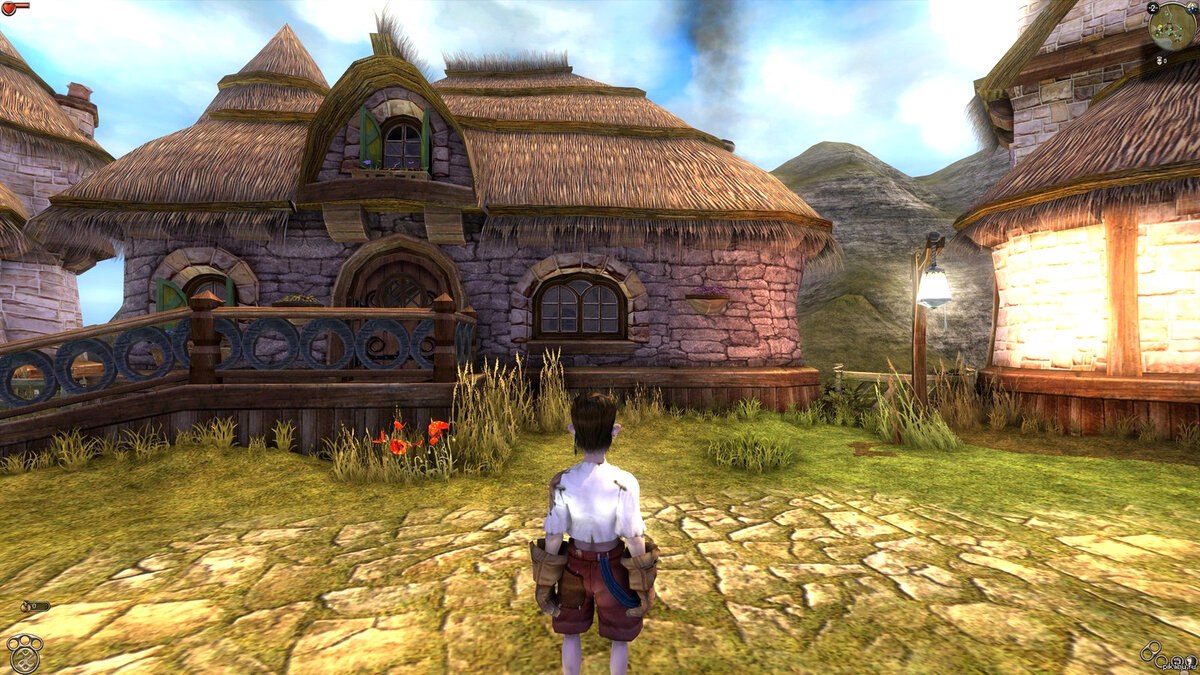
Kicking chickens cost you local karma in the village
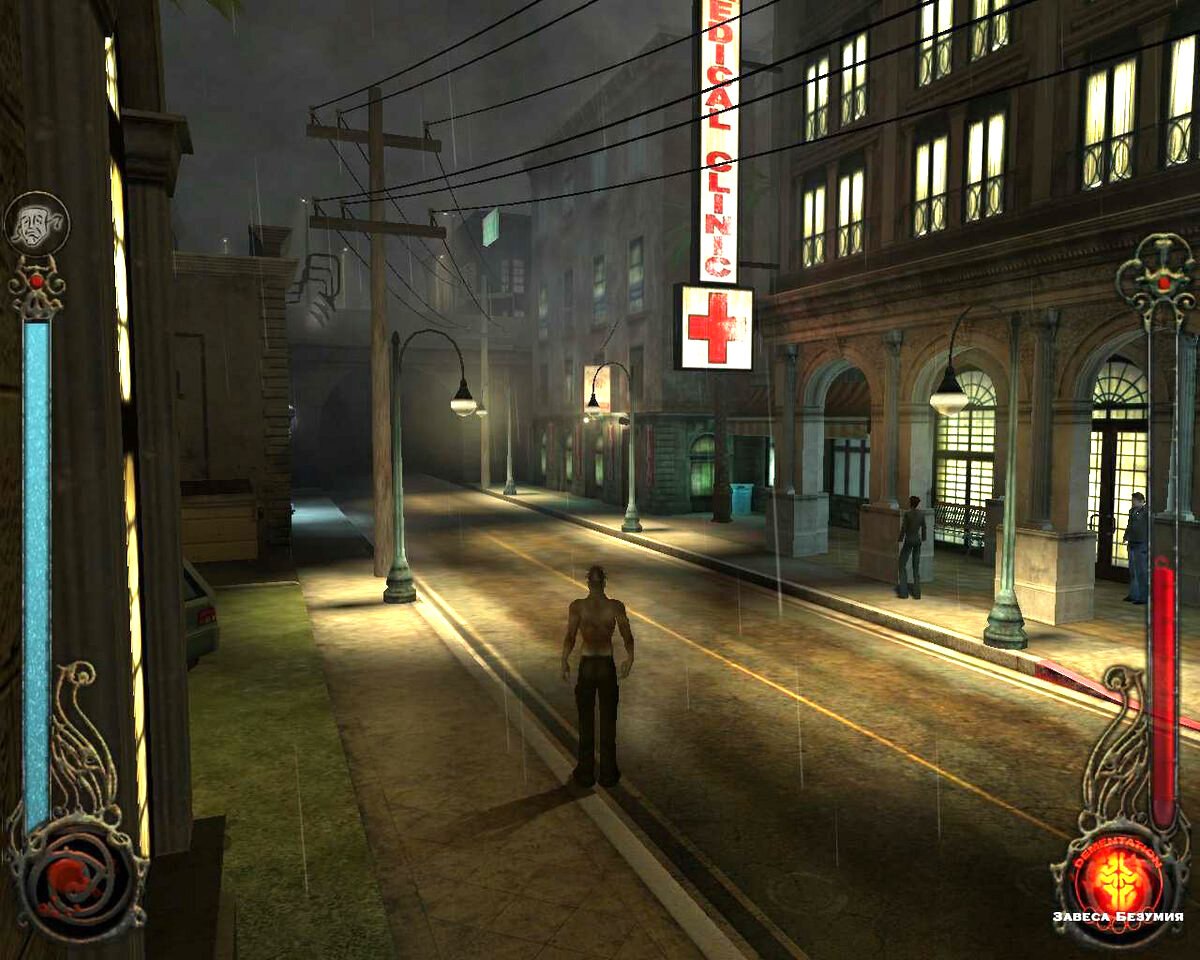
And probably one of the best implementations of karma is in Vampire: The Masquerade – Bloodlines (2004). In the game the player has a "humanity" parameter; it isn't displayed anywhere, and you have to keep track of it yourself. Even the kindest vampire on the level can fall into frenzy — it's just very unlikely. Using certain actions and making evil decisions raises the probability of falling into frenzy, when the player loses the ability to control the character and the latter goes on a massacre of the humans around without any keyboard input.
Visible walls and limits
Developers have become afraid of limiting space; the urge to show how big and open the game is seems to overshadow everything else (thanks again, Minecraft). If you don't have an open world — ugh, expect half as many checkmarks on wishlists. So they cobble one together — every which way. Of course a game designer has to keep the player within certain bounds of the world, but limits (invisible walls) without a good reason cause yet another wtf!?. The worst thing you can do here is to put up invisible walls that don't let you explore further. It's easiest to put up an invisible wall rather than write any limitation into the game. But now showing a wall is considered something shameful — you have to make a great view receding into the distance and just not let you go there.

Sorry, couldn't resist.
Design for the player
Fallout is cool. Let's make a new Fallout. Know why Fallout is cool? It didn't try to repeat anyone. I see nothing wrong with borrowing ideas from great games, but to borrow doesn't mean to copy. Otherwise the result comes out the same as in that cool game that came out last year, only worse and with cut-down textures. And instead of asking themselves "And how will this feature be interesting to people?", designers start tacking frills onto well-known mechanics. And the result is a failure to understand why this mega-feature didn't spark interest. How can that be? In the tests our QA said everything was mega-cool.
The Uncharted developers model levels so they'd be interesting to play for the employees' children — I don't know what this approach is called, but it's definitely worked for the fourth game in a row.
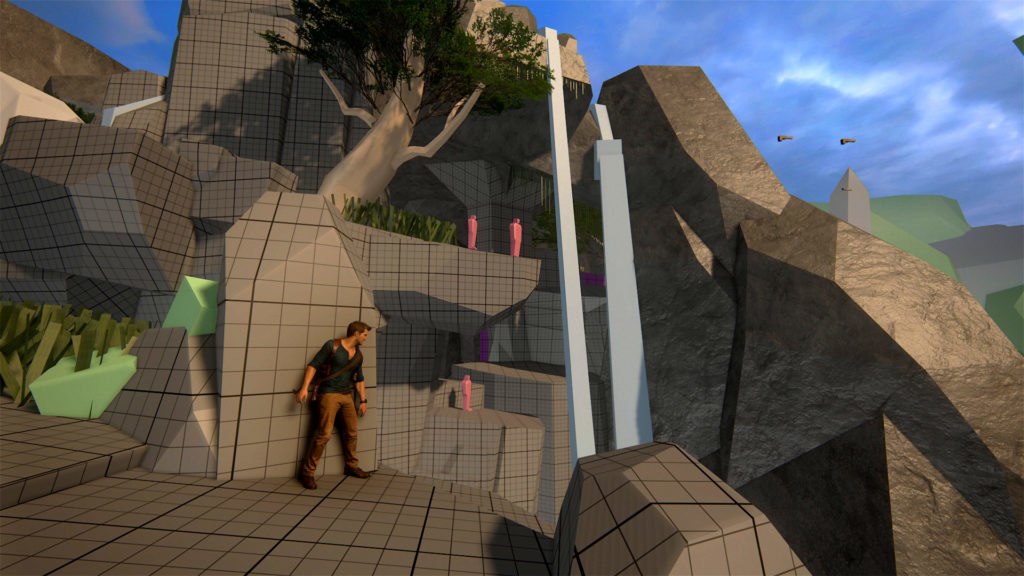
Make the level design interesting to a child — it's really hard.
The trouble with many teams is that they've stopped making a game for themselves, the Dream Game. They look at charts, at the audience, without thinking about fun and engaging gameplay, and tack on frills. They hang on the publisher's every word, who says do this, don't do that, because last time it didn't pay off. They made it, shipped it and cried, because people went off to play some indie thing. Or the other extreme — blindly believing in some principle, for example realism, without thinking that there's already enough realism around. Or the now-fashionable faith in big projects — need more mechanics, more realism, a bigger map — let's add everything, just more, more, and ship it on Steam, there are more people there, maybe someone will buy it. Lots of weapons, lots of monsters, lots of NPCs, lots of activities — why all this should be interesting to the player is a secret behind seven seals. More doesn't mean better; more is just more. The main criterion for evaluating a game is enjoyment. The phrase "but it was like this in a game six months ago" doesn't give a project +2 to success, and this mechanic will certainly be less interesting than in that game six months ago.
Difficulty
Games have stopped being made difficult, because there's no demand from the audience for such games. A game's difficulty directly correlates with the amount of textual information in it; difficult and interesting games always had a lot of text that you need to find, read, comprehend and then figure out where to apply this knowledge — that's all time, and you need a lot of it for all these actions. Instead there's demand for casual games and short 15-minute session games. "Casual games" are honestly looked down upon in "narrow" developer circles for PC and big consoles — and there's a bit of envy of the money circulating there. But casual doesn't mean "for idiots", it means they're made so simply that even children will understand. And explaining and showing complex things simply and, most importantly, interestingly is a task far from average — try it, try getting even a 10-year-old child interested in CK3, whereas Civ6 is easy. It's like trying to explain the PhysX sources to a junior. And where the bulk goes, there's the money. Then the publisher comes and asks "$$$ ???" — come up with the rest of the arguments yourself.
Distribution sizes
In '98 I carried Caesar III to my home computer on floppies like these over a couple of days, because there was one CD drive for the whole stairwell, at a neighbor's on the fifth floor. And the game's size was something around 100MB.

a weekly floppy set from 1998
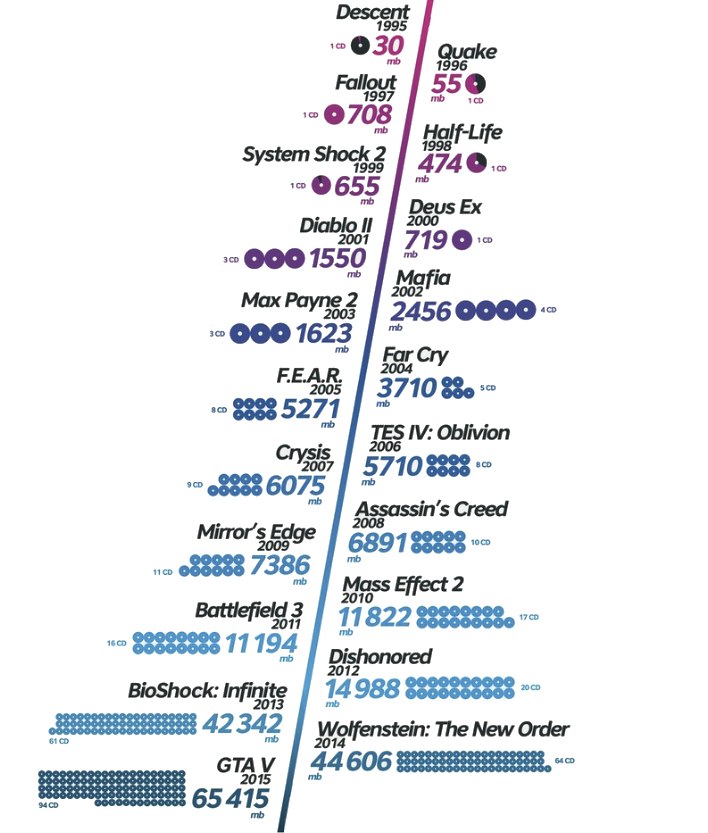
I'll leave this here, maybe someone will find it interesting — Moore's law from game developers: the distribution size of an average game doubles every three years, and don't let the lull in distribution sizes over the last couple of years fool you, part of the size has simply moved online. Roughly from 50% of the distribution size on the local machine is now shared on a CDN for on-demand access, but the psychological barrier of 100GB is not far off, and I believe it will soon be crossed, and from there it'll spin off onto a new round of sizes again.
Grumbling
This isn't all the lost knowledge of the ancients, and probably not the larger part of it. But there are still orthodox studios that know how to assemble "complex and inconvenient" games — though there are fewer and fewer of them. Sure, the smoothie used to be greener and the floppies squarer. Maybe there were also fewer games, the audience was smarter and the developers cooler. But look at the situation from another angle — maybe we're simply at the start of a rise in quality (I forgot what this term is called): the expected quality of projects grows year over year, and along with it the accumulated experience of teams and the industry as a whole inevitably grows, and whoever can't keep up ends up overboard fairly quickly. And someday this quantity should turn into quality, I hope — maybe ChatGPT will catch up soon too.
UPD: The article probably came out a bit sad, because only the downsides were noted, but that doesn't mean good games aren't being made. They are, and plenty — as @cat-chi said in the comments — there are now very many games, but the number of people who know how to make good games hasn't grown much. Skyrim, GTAV, Minecraft, ME, FC3, Mafia 1/2, DA1/2, Metro, CoD, Heavy Rain, DS, Uncharted, BotW and a dozen other titles. And that's probably why, among this mountain of games, it's become harder to find truly interesting ones that you'd want to replay 20 years later. As for the grumbling, sorry, I did warn you :)
UPD2: The Minecraft bit was irony — of course the one that really broke everything was "The Elder Scrolls II: Daggerfall".
← All articles